Blog

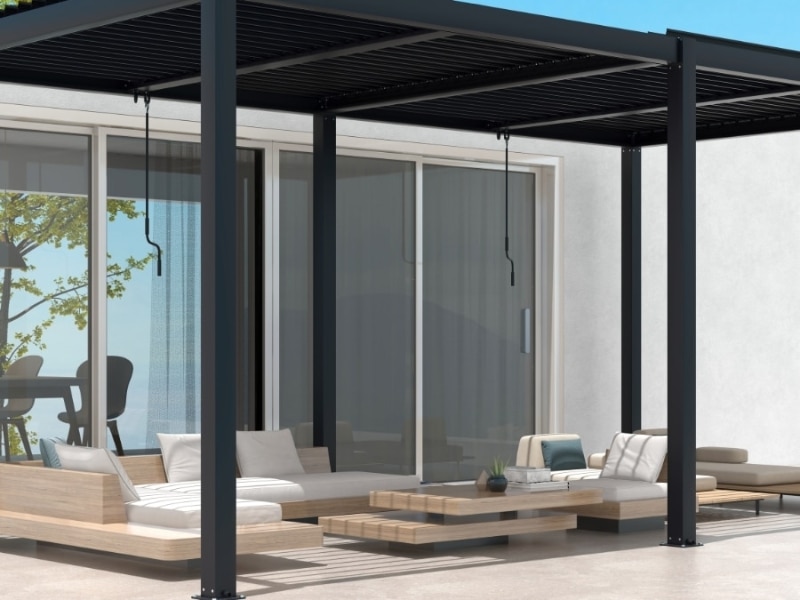
When you’re choosing a solid base for your outdoor structure, opting for pergola concrete slabs can deliver far greater performance than pavers—especially when you’re dealing with long‑term stability, ease of maintenance and durability. In fact, if you want a surface that won’t wobble, shift or crack under your pergola’s posts, then the right slab makes all the difference. With proper installation and preparation, you’ll avoid many of the issues that arise with paved surfaces under a pergola and end up with an outdoor space that stays level, dry and secure for years.
Why do some pergola bases fail on paver surfaces?
When a pergola sits atop paver surfaces, failure often starts at the base—because the foundation beneath the pavers wasn’t designed for structural loads or frequent movement. Some key problems you’ll encounter include:
- Pavers installed without a proper compacted base or edging can shift under load, causing posts to tilt or settle unevenly.
- The interlocking design of pavers can mask subtle shifts in the sub‐base, but once movement starts, it accelerates and affects stability.
- Water may seep through joints or gaps between pavers, eroding or weakening the sub‐base and undermining the support for pergola columns.
- If the paver surface wasn’t laid with structural intent (e.g., only for pedestrian use) then adding a pergola introduces new load paths that the original installation didn’t account for.
Because of these risk factors, many pergola bases on pavers end up uneven, require re-levelling, or interpret load movement as fractures or gap issues. When you consider a pergola based on pavers, you must ask whether the paver system and the base below it were engineered for structural use—and often the answer is “no”.
What stability issues arise with uneven pavers?
Uneven pavers under a pergola can lead to a cascade of structural and aesthetic issues. Sloppy base, settlement or movement means the pergola won’t sit level, and that spells trouble for longevity. The common stability issues:
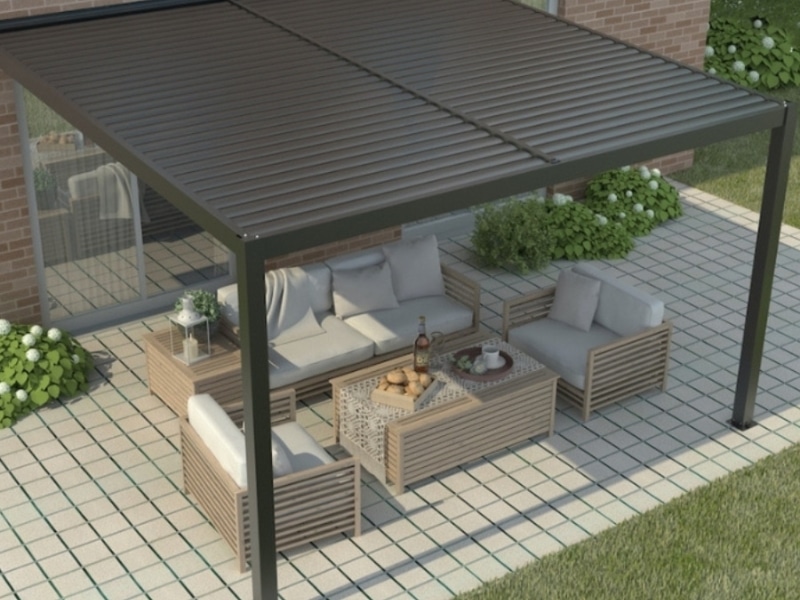
- Trip hazards or visible gaps between pavers occur once the frame of the pergola imposes weight and vibration.
- Posts and fixings are pulling out or loosening because the anchor point has settled or shifted.
- Joints between pavers are lifting or separating, leading to water ingress and accelerated base failure.
- The pergola itself is tilting, doors or screens are misaligned, or the entire structure feels unstable when wind loads act on it.
If you’re looking at different base options, it’s worth understanding the risks involved in pergola installation on different surfaces — especially when long-term structural stability is your goal.
How can poor surface preparation affect your pergola’s lifespan?
Poor surface preparation significantly shortens a pergola’s lifespan—no matter how well the posts or beams are built. If the base beneath your outdoor structure isn’t handled properly, you’ll be wrestling with cracks, settlement or corrosion long before you should. Consider these factors:
- Failing to remove organic material, roots, or soft fill means future compaction and settling will compromise the base.
- If the sub‑soil isn’t compacted and stabilised, any loading from the pergola will accelerate movement and settlement.
- Without proper drainage and slope, water accumulates near the base, causing erosion, undermining supports and introducing rust risks for metal fixings.
- Using pavers on top of an inadequate sub‑base or with improper edge restraints means the surface is vulnerable to lateral movement, reducing the structural reliability of the pergola.
Here’s how these preparation issues can impact your pergola:
| Preparation Mistake | Resulting Issue | Long-Term Impact |
| Uncompacted soil or organic fill | Settlement under posts | Uneven structure and leaning |
| No drainage or slope | Water pooling near posts | Rusting of fixings, erosion |
| Weak or shallow sub‑base | Movement under pressure | Loosening of anchors and instability |
| No edge restraints for pavers | Lateral spreading | Structural failure and rework |
When you don’t treat surface preparation for a pergola as seriously as the frame itself, you invite long‑term issues: instability, misalignment, and finally replacement or repairs sooner than expected. To avoid these headaches, ensure your base is level, compacted and designed for structural loads—not just as a decorative patio surface.
What makes concrete slabs more durable for pergolas?
Concrete slabs bring in the big guns when it comes to durability for pergola bases. Because they’re poured as a continuous element, they offer uniform load distribution, minimal movement and structural consistency—exactly what a pergola needs. Key benefits of durable concrete slabs in this context are:
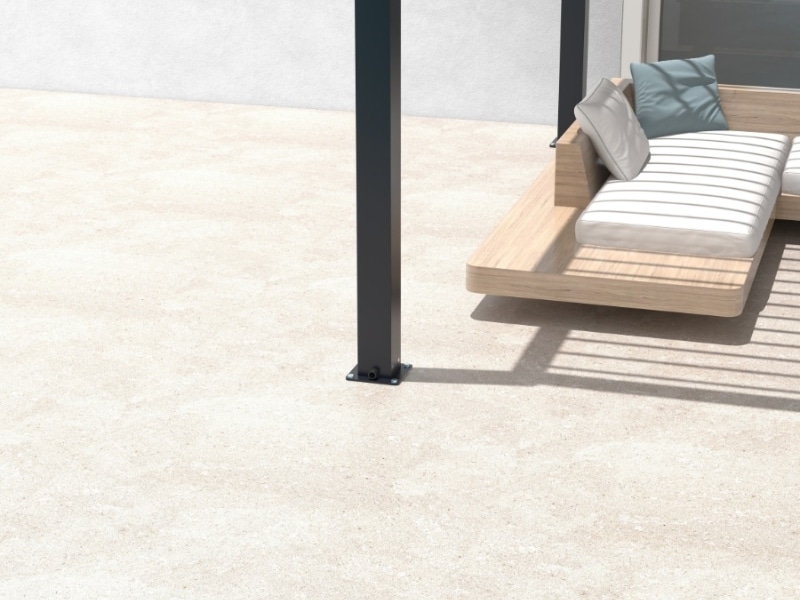
- Single‑pour slabs remove the weak points inherent in joints between pavers. Unlike pavers, there aren’t many seams for movement to start.
- When properly reinforced (rebar, mesh) and poured on a prepared sub‑base, concrete slabs resist uplift, tilting and weather‑related movement significantly better.
- Minimal gaps mean less weed growth, less water infiltration under the surface and fewer chances of base degradation over time.
- Maintenance is straightforward: cracks can be controlled via joints, and the slab remains stable under structural elements like pergola posts and beams.
If you’re designing something with long-term strength and low fuss, modern outdoor pergola design solutions should start from the ground up—with the right slab.
Can you combine concrete and pavers for a balanced outdoor design?
Combining materials gives you the best of both worlds: the structural strength of a slab and the aesthetic versatility of pavers. The concept of mixed outdoor surfacing ideas lets you place your pergola on a concrete slab for stability, while surrounding areas use pavers for design impact. Here are some ways to do it:
- Pour the slab only under the pergola footprint and extend into a paver surround, creating a strong “inner circle” with a decorative outer zone.
- Use the slab as a continuous pad for posts and beams, then use pavers as an infill or pathway around it to add texture and style.
- Implement a transition strip between the slab and pavers to isolate movement and provide a clean visual break.
- Design drainage and base layers appropriately: the slab area sits on engineered fill and compacted base; the paver area may use sand and edge restraints, but only for the decorative zone.
Combining materials doesn’t just look good—it adds cunning functionality. You get the structural integrity from the slab and the design flexibility from the pavers. This hybrid approach often suits clients who are both practical and style‑savvy. It’s a fair-dinkum way to design smart.
Final thoughts on choosing between slabs and pavers
When deciding on a pergola base material choice, the smart move comes down to purpose. If you’re planning to install a pergola kit that will stand strong and last, having a stable, well-prepared base like a concrete slab can make a world of difference. While the visual appeal of pavers is hard to beat, slabs offer less movement, more reliability, and a foundation that’s far better suited for structures like pergolas.
If you’re using one of our DIY kits or working on a custom build, preparing the right surface before you install is key. For tailored advice on planning your project or choosing materials that suit your space, reach out for guidance from the team at Unique Pergolas.