Blog

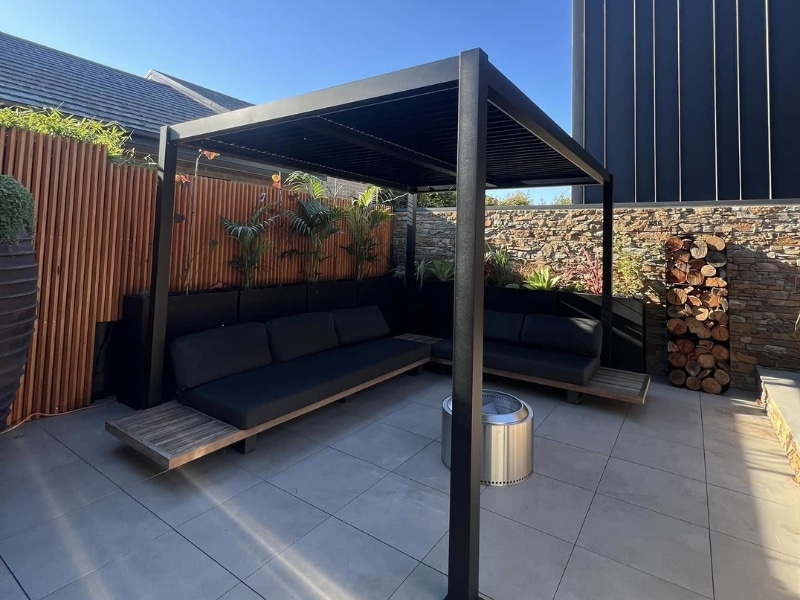
A small backyard can feel cramped when you try to squeeze in a pergola, a garden bed, and a patio area. Then you wonder whether the pergola will dominate the space or fit in gracefully. Choosing the right design matters — too large and it overwhelms the yard, too small and it feels pointless. This article explores how well‑designed diy pergola plans can turn even tight outdoor spaces into inviting, functional areas without compromising flow or aesthetics.
Why do pergola size constraints challenge small backyard projects?
Even before picking materials or style, the size of a pergola must be carefully measured against the backyard’s dimensions. Too often, people underestimate how much room a frame, posts, and roof beams occupy. In a small space, this can lead to a pergola that overwhelms the yard or leaves barely any room around it.
When boundaries are tight, a full‑size build may block paths, sunlight or sight lines. Narrow yards make accurate placement tricky. Overestimating available space increases the risk of a build that feels overly cramped — hardly the relaxed outdoor zone you hoped for. Here are the common challenges caused by pergola size constraints:
- Limited clearance around the structure for walking or furniture placement.
- Reduced access to windows or doors if the pergola sits too close to the house.
- Shadows or blocked sunlight on garden beds, lawns, or neighbouring structures.
- Difficulty in landscape flow — paths, plants, and seating may feel squeezed.
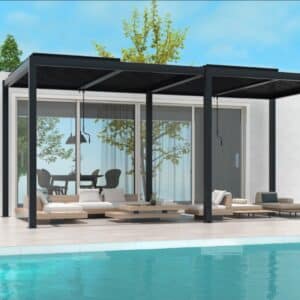
The best solution often lies in a custom-designed pergola that’s scaled specifically to fit your available yard space. With tailored dimensions and frame layout, you gain functionality without sacrificing aesthetics.
What problems arise when pergola spacing guidelines are unclear?
Unclear spacing guidelines often lead to awkward proportions or unstable builds. Mistakes in spacing between posts, beams, or rafters can affect structural integrity. In small yards, the margin for error shrinks. Here are the typical issues when spacing guidelines are vague or misapplied:
- Posts too close together can make the structure look bulky and block usable floor space.
- Posts too far apart may compromise support and risk sagging or bending over time.
- Rafters and beams placed without regard to sunlight or clearance can cast heavy shadows or hit low-hanging cables or gutters.
- Inconsistent spacing can lead to uneven load distribution, increasing wear on certain parts or causing instability.
Material selection also plays a role. If you’re unsure what suits your conditions, start with ideal pergola materials for limited outdoor areas. These tend to offer lightweight support and are easier to manage in compact layouts.
Here is a quick table highlighting how improper spacing impacts the structure:
| Spacing Error | Visual Impact | Structural Risk | Common Result |
| Posts too close | Feels crowded and bulky | None, but poor use of space | Loss of functional area |
| The posts are too far apart | Appears too open | Risk of sagging or collapse | Unstable frame |
| Uneven post spacing | Visibly off-balance | Uneven weight distribution | Structural stress |
| Tight rafter spacing | Heavy shadowing | Minimal airflow | Reduced light penetration |
| Wide rafter spacing | Sparse shade | Less rigidity | Overexposed sitting areas |
This kind of variation not only alters the appearance but also affects how the structure holds up over time. Small mistakes in a tight space tend to feel magnified.
How can limited outdoor layout planning make small yards feel even tighter?
A backyard isn’t just “empty space” — it’s an ecosystem of pathways, lawn, garden, and maybe a patio or deck. Without proper planning, you risk cluttering the yard even before the build starts. Poor layout planning creates friction between new structures and existing features. Here are the problems that emerge when layout planning is overlooked:
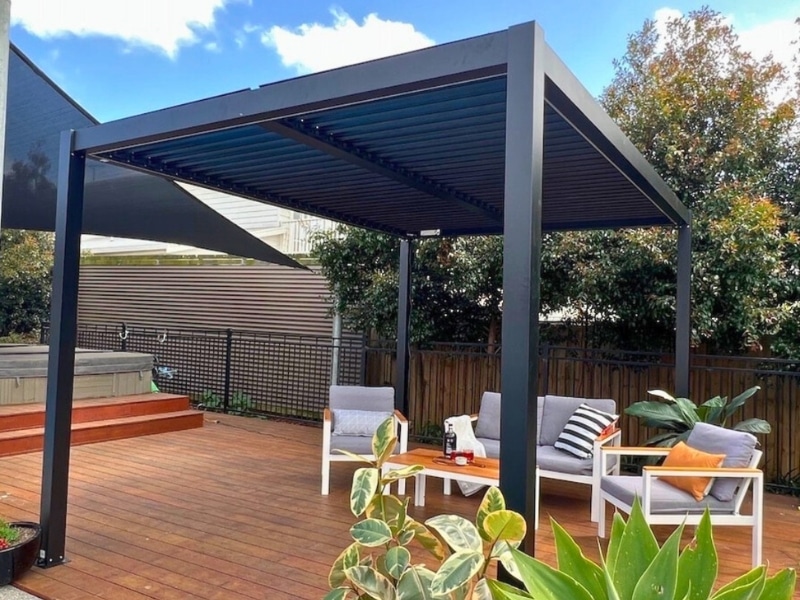
- Walkways become narrow or obstructed, hindering easy movement.
- Garden beds lose sunlight because of misplaced shade.
- Seating areas feel boxed in or disconnected from existing landscape flow.
- Outdoor furniture and fixtures can feel squeezed, limiting usability.
Rushing through this step can quickly make even a simple build feel overcomplicated. That’s why drawing up a backyard layout first, even a rough one, helps to avoid these frustrating outcomes.
Which framing options simplify timber cutting guides for compact pergolas?
When space is limited, simpler framing approaches deliver the best results. Using fewer posts, shorter beams, and minimal overhang helps ensure the pergola fits without dominating the backyard. Compact frames come together quicker and with less waste. Here are the framing options that work well for small pergolas:
- Short-span frames that reduce offcuts and improve material efficiency.
- Lean‑to designs are attached to an existing wall, reducing footprint and post requirements.
- Minimal overhang (30–50 cm) to lower visual bulk while still offering shade.
- Square or rectangular frames (e.g. 2.4m × 3.0m) — easier to position in narrow yards.
Here are the benefits of simpler framing options:
- space-saving design fits comfortably in tight yards.
- Cuts follow practical timber guides, reducing measurement mistakes.
- time-saving build process reduces labour and helps avoid long delays.
- Less material waste — cost is lower, and construction is more efficient.
These options make it easier for homeowners to work with materials sourced separately and bring plans to life without professional framing knowledge.
How do step-by-step building instructions support accurate DIY assembly?
Clear, incremental instructions suit compact builds especially well. Following instructions step by step reduces confusion and avoids miscuts or misalignment. That’s critical with tight tolerances inherent in small backyards. Here are the ways good instructions help:
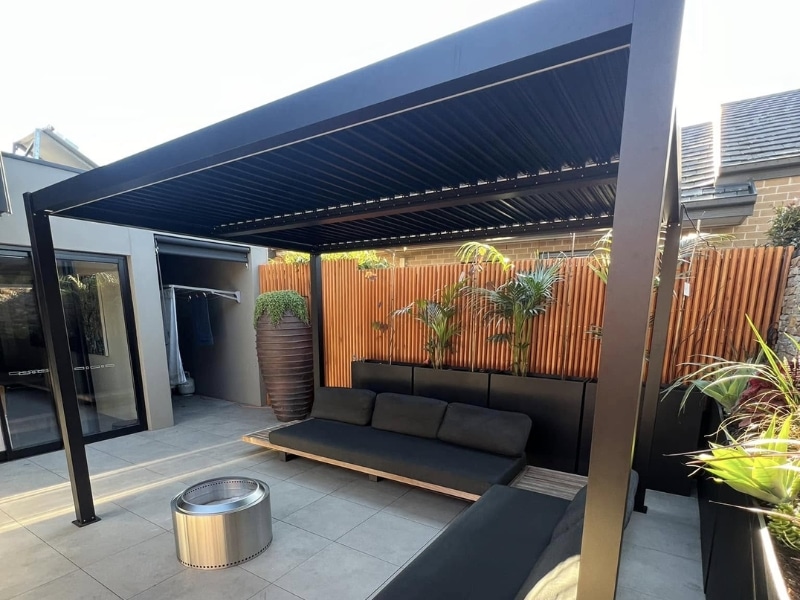
- Provide accurate measurement checklists before cutting — avoids wasted timber or mismatched beams.
- Guide correct alignment and post spacing — ensures structure remains stable and straight.
- Help visualise each stage, so you can foresee potential interference with fences, gutters or windows.
- Offer recommended treatments and fixings — improves pergola durability in outdoor conditions.
When each stage is clearly explained, you eliminate the guesswork that often leads to frustrating rebuilds. Even novice builders benefit from straightforward plans tailored to compact sites.
Final thoughts on choosing DIY pergola plans for small backyards
Choosing the right pergola plan makes all the difference for small spaces. Opting for a compact frame with clear cuts, minimal overhang, and reliable instructions ensures the pergola fits snugly without overwhelming the yard. A build becomes a bonus — not a burden — on outdoor space. If you’re unsure where to begin or need a design that suits tight layouts, get in touch with Unique Pergolas. They can help turn your space constraints into a feature, not a flaw — and guide your project toward something practical and long-lasting.