Blog
Which Materials Are Best for a Pergola in Front of Your House?

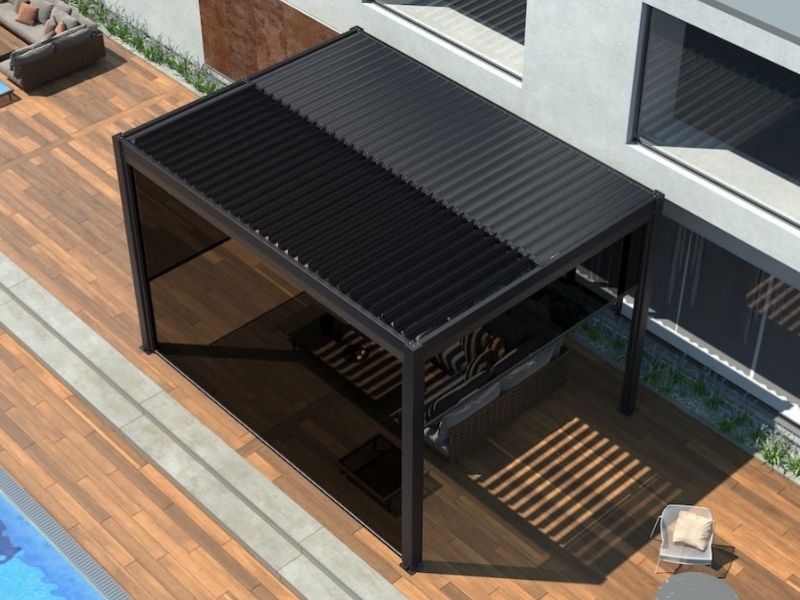
The best materials balance durability, upkeep, and street appeal in Australian conditions for a pergola in front of house. Because exposure at the façade is harsher, the choice should handle wind, salt, and sun without fuss. Materials also influence the structure’s appearance and how frequently you’ll need to use the tools. This article compares aluminium, timber, and steel, then covers motorised louvres, maintenance, and kit choices for tidy results.
What materials are used in a pergola in front of a house, and why choose them?
Aluminium, hardwood timber, and coated steel dominate front-of-home pergolas because they offer distinct trade-offs for exposure, style, and budget. Here are the material selection factors:
- Site exposure: Coastal spray and westerlies push you toward corrosion-resistant finishes.
- Structure depth: Slim lines suit entries; pick members that carry span without bulk.
- Upkeep appetite: Oil, repaint, or wash—decide now, save hard yakka later.
- Street character: Match façade era and colours for a cohesive look.
In front zones, aluminium often means low ongoing maintenance, timber delivers warmth, and steel enables longer spans with slender posts. However, detailing matters. Isolate dissimilar metals, seal end grain, and protect fasteners from splash zones. A good detailing plan reduces rework, so the pergola stays tidy after storms.
How does aluminium perform when used for outdoor pergola designs?
Aluminium performs strongly at the façade because it resists corrosion, keeps weight down, and accepts durable powder-coat finishes. Here are the aluminium performance notes:
- Coating choice: Marine-grade powder-coat and stainless fixings prevent galvanic headaches.
- Spans and weight: Extrusions deliver an excellent span-to-weight ratio for driveways and entries.
- Integration: Hidden gutters, lighting channels, and downpipe posts keep façades clean.
- Heat control: Pale colours and vented roof profiles reduce heat build-up near glazing.
In coastal suburbs, aluminium offers strong coastal durability that outlasts unprotected steel, and it avoids swelling issues seen in some timbers. Still, dark coats can run hot in summer. Consequently, lighter hues, thermal breaks, and ventilation paths keep the porch comfy. Aluminium suits modern façades and busy routines; it also works a treat where access for maintenance is tight.
Why might timber or steel still be popular for home pergola builds?
Timber and steel remain popular because timber softens façades while steel delivers slim posts and long, clean spans. Here are the timber and steel considerations:
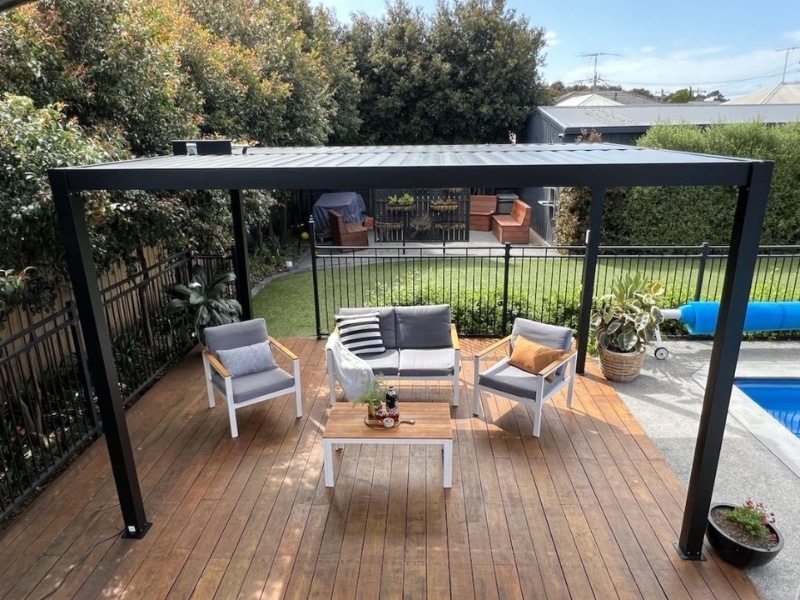
- Timber character: Natural grain gives a warmer, natural character on heritage streetscapes.
- Termite risk: Inadequate barriers can leave timber vulnerable to termite attack in certain suburbs.
- Steel strength: Thin sections support heavier roofs and screens without the need for chunky beams.
- Budget planning: Fabrication, coatings, and hot-dip galvanising can mean a higher upfront cost.
Timber needs species selection, raised feet, and regular oiling. Meanwhile, steel needs galvanising and careful isolation from other metals. Both shine when detailed well, but taking shortcuts can lead to noise, rust spots, or cupping boards after a big wet. Match material to house style and set a realistic maintenance rhythm; you’ll hit the sweet spot without dramas.
Can a motorised louvered roof be integrated into a pergola in front of house?
Yes—motorised louvres integrate neatly, giving year-round control over sun, breeze, and rain at the front entry. Here are the louvre integration essentials:
- Blade geometry: Deeper blades cast longer shade and manage glare to the door.
- Sensors: Rain and wind sensors close the roof automatically—no dramas mid-errand.
- Services: Conceal power in posts; plan switch location near the entry.
- Drainage: Oversized gutters and overflow paths handle cloudbursts without splash-back.
Louvres solve two common problems: wet steps during storms and harsh afternoon glare. They also transform a small terrace into a flexible spot for shoes, deliveries, or a quick cuppa. With thoughtful wiring, quiet motors, and subtle controls, the roof works smoothly without cluttering the façade.
Takeaway: integrate early in design to align blade angles, posts, and door clearances.
What maintenance tips extend the life of a pergola in front of house?
A simple routine keeps things sharp and prevents minor issues from snowballing. Here are the maintenance priorities:
- Wash schedule: Rinse powder-coated frames with pH-neutral soap every quarter.
- Timber care: Re-oil sun-exposed boards every 6–12 months; seal cut ends immediately.
- Steel checks: Inspect for chips after storms; touch up to block corrosion.
- Vegetation: Keep climbers off joints; raise pots to stop trapped moisture.
Siting and orientation also matter for comfort and durability. Mid-morning sun can glare through entry glass; late southerlies can drive rain under shallow roofs. Align shade and ventilation with sustainable house design principles for Australian homes to reduce heat gain and moisture, then adjust blade angles or add a batten screen to fine-tune comfort without extra hard yakka.
Which DIY or fixed-kit pergolas suit Australian homes best?
DIY and fixed kits suit simple façades with level slabs; complex sites benefit from custom design and compliant footings. Here are the DIY versus custom checkpoints:
- Site complexity: Slopes, services, and odd eaves favour measured, engineered solutions.
- Wind ratings: Verify local wind class and footing depths before drilling.
- Future upgrades: Choose systems with louveres, lighting, or screen add-ons.
- Fit and finish: Dry-fit brackets first to avoid patchy holes on visible brickwork.
Informative table options (DIY, installed, motorised, bundles, accessories)
| Offering on the provider site | How does it help a front-of-house pergola |
| DIY pergola options | Suits straightforward façades; quicker installation when access is tight. |
| Installed pergola service | Ensures compliant footings and neat integration with gutters and fascia. |
| Motorised pergola models | Blade control for rain and glare; protects parcels and steps. |
| Bundles/packages | Streamlined selection and matched components for a clean, uniform look. |
| Screens and accessories | Adds privacy and wind control without increasing the structure’s size. |
For homeowners considering a custom path, Reliable offers custom pergola solutions that align structure, finishes, and drainage with exposure and council limits, keeping the façade tidy and practical.
Choosing the right materials for a pergola in front of house
Choosing materials for a front pergola comes down to climate, maintenance appetite, and façade style. Two common issues arise: undersized fixings that loosen in the wind and coatings that chalk prematurely. Agitated by exposure, those faults multiply into rattles and stains. Fortunately, two solutions solve most grief: specify coatings and fasteners for the site, and size posts and beams for span and wind class. That way, the pergola looks sharp and works day in, day out. Once a shortlist is ready and budget guardrails are established, discover how Unique Pergolas crafts outdoor spaces designed for comfort, providing a thoughtful approach to selecting the ideal combination of materials, roof design, and detailing for the home’s front elevation.