Blog
Louvre Roof Pergolas: Are Retractable & Opening Roofs Worth It?

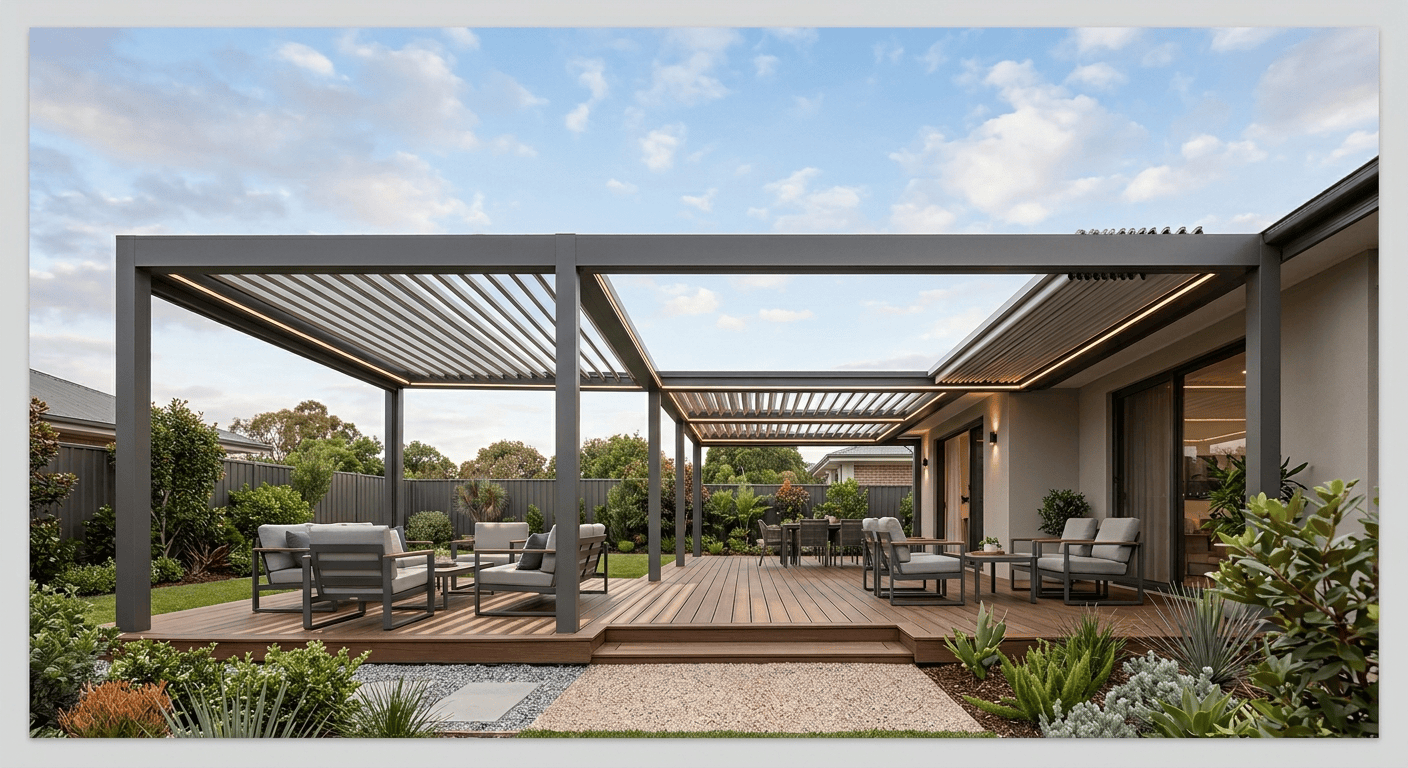
Louvre Roof Pergolas: Benefits, Retractable vs Opening Roofs and Buying Guide
A louvre roof is an adjustable roofing system made from rotating blades that open or close to control sunlight, airflow and rain exposure. Retractable and opening roof systems can extend the time an outdoor space is usable, though the right choice depends on your home’s layout, climate, budget and how much automation you actually want.
A fixed pergola roof gives you consistent coverage. A louvre roof gives you control over how much sun and airflow reach the space. Searches for “retractable roof” and “opening roof pergola” often overlap, but the two terms don’t always refer to the same mechanism, which is worth clarifying before you compare products.
This guide covers how louvre roofs work, how opening and retractable systems differ, how they perform in Australian conditions, and what to weigh up before buying one.
If you haven’t yet decided whether a louvred pergola is the right upgrade, start there. This guide picks up from that point and goes a level deeper into how the roof itself operates and whether an opening or retractable system suits your space.
In This Guide
- What are the benefits of installing a louvre roof
- How do retractable and opening louvre roofs compare
- How does a louvre roof perform in Australian weather
- What to consider before installing one
- Is a louvre roof worth the investment
- Louvre vs retractable vs fixed roof
- Frequently asked questions
What Are the Benefits of Installing a Louvre Roof?
A louvre roof offers adjustable sunlight, better airflow and more flexible weather protection than a fixed roof, making an outdoor area usable for more of the year. Because the roof responds to conditions rather than staying locked in one position, it also works with the rest of an outdoor living setup instead of dictating it.
Adjustable Sunlight Control
Rotating louvres let you change the angle of the roof blades, so you can let in more sunlight, filter it, or close the blades for deeper shade. That flexibility matters across an Australian day, when the sun’s position and intensity shift from a mild morning to a harsh early-afternoon glare.
Improved Airflow
Opening the louvres creates gaps that allow warm air to escape rather than become trapped under a closed roof, while keeping the space connected to the outdoors.
Protection From Changing Weather
Closing the louvres provides more protection from direct sunlight and light rain than an open structure.
It is worth being precise here: that is weather protection, not a guarantee that every louvre system is fully waterproof. Rain protection, water management and true waterproof performance are related but distinct, and they depend on the specific roof, its seals and its installation.
More Usable Outdoor Space
A patio, deck or entertaining area that only works on mild, dry days doesn’t get used very often. Being able to adjust the roof to suit the conditions means outdoor dining, weekend barbecues and evening get-togethers are less dependent on the forecast.
Integration With Outdoor Living Features
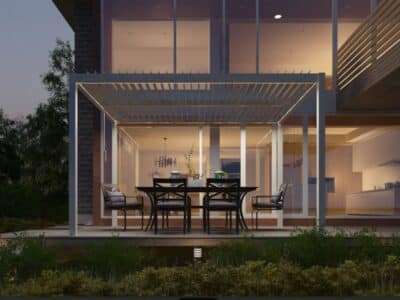
A louvre roof pairs naturally with the rest of an outdoor room. Homeowners commonly combine one with outdoor kitchens, furniture, heating, lighting, screens, sliding doors or glass enclosures to create a genuine room rather than a shaded patch of concrete.
What are the main benefits of a louvre roof?
- Adjustable sunlight
- Airflow control
- Weather protection
- Greater outdoor-space flexibility
- Integration with screens and other outdoor-living features
How Do Retractable and Opening Louvre Roofs Compare?
They are not always the same thing. Opening louvre roofs adjust by rotating roof blades in place, while retractable systems move a roof panel or material aside to open the space.
Because “retractable” gets used loosely in marketing, check exactly how a roof physically operates before assuming two products work the same way.
Opening Louvre Roofs
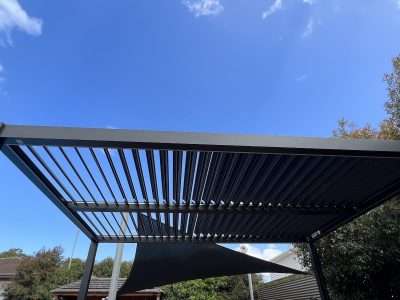
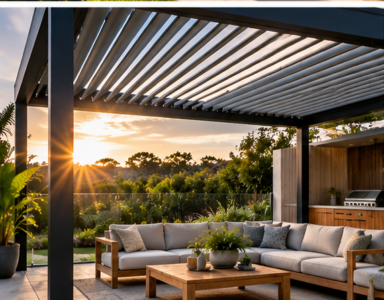
An opening louvre roof uses a set of rotating blades that pivot on a shared axis. Adjusting the blade angle controls sunlight and airflow, from fully open to fully closed, without any part of the roof moving away from its frame.
Retractable Pergola Roofs
A retractable roof may instead use a fabric, panel or slatted section that slides or folds back rather than rotating in place.
The mechanism and material vary between products, so “retractable” on its own tells you very little about how the roof will perform in wind, rain or direct sun.
Manual vs Motorised Operation
Manual systems use a hand crank or similar mechanism. Motorised systems adjust at the push of a button or by remote.
Motorised operation adds convenience and finer control, particularly if the roof is hard to reach, but it also brings more mechanical and electrical components.
Neither option is automatically cheaper or better; it depends on how often you’ll adjust the roof and how much you value hands-free control.
The manual louvred pergola range is a useful reference point for what a simpler system includes.
Which System Suits Different Homeowners?
| Option | Best suited to | Main advantage | Consideration |
|---|---|---|---|
| Opening louvre roof | Everyday outdoor living | Adjustable sunlight and airflow | Requires appropriate structure and drainage |
| Retractable roof pergola | Flexible coverage | The roof opens or retracts away | Mechanism and material vary |
| Manual louvre system | Simpler operation | Lower mechanical complexity | Adjusted by hand |
| Motorised louvre roof | Premium outdoor spaces | Convenient operation | Higher upfront cost |
This is a general comparison of how these systems tend to work. Actual performance and features vary between products and installations, so check the details of any system you are considering.
How Does a Louvre Roof Perform in Australian Weather?
Performance depends on the specific system, its materials, installation quality, drainage design and local conditions, so no single claim covers every louvre roof. These are the factors worth understanding before you buy.
Sun and UV Exposure
Adjustable louvres let you respond to the sun’s position through the day, which helps protect outdoor furniture, flooring and fabrics from prolonged UV exposure.
Closing the roof through the harshest part of the afternoon, rather than living with a fixed shade angle, is one of the clearest practical wins of an adjustable system.
Rain and Drainage
Closed louvres can redirect rainwater away from the space below, and some systems include integrated gutters in the frame.
Water management still needs to be assessed at the design stage, because drainage paths, seals and installation quality all affect how a roof holds up in heavy rain.
Wind
Wind exposure affects how a louvre roof needs to be engineered, fixed and installed, and it varies significantly by site, structure type and location.
A pergola on an exposed coastal block faces different loads than one tucked against a house in a sheltered suburb.
Rather than relying on a general wind rating, have the structural and installation requirements assessed for your property.
Heat and Ventilation
Opening the roof lets warm air escape more readily than a fully closed roof, which improves airflow underneath in hot weather.
The temperature difference depends on the site, orientation and louvre angle, so treat it as improved airflow rather than a guaranteed cooling figure.
Coastal and Harsh Environments
Material selection and maintenance matter more in coastal or otherwise harsh environments, where salt air and humidity affect fixings, finishes and moving parts over time.
If you are near the coast, ask specifically how a system’s materials and coatings are suited to that exposure.
What Should You Consider Before Installing a Louvre Roof Pergola?
Before choosing a louvre roof pergola, assess your available space, roof orientation, drainage, wind exposure, materials, manual or motorised operation, screens, installation requirements, local approvals and budget together, rather than deciding on any one factor in isolation.
Available Space and Pergola Dimensions
Start with your existing patio or deck dimensions, the coverage you actually want, and whether a wall-mounted or freestanding structure suits the site better.
Clearance, access and where the furniture will sit all affect the practical size you need.
Roof Orientation and Sunlight
The direction a pergola faces changes how much morning versus afternoon sun it receives, which affects heat build-up and how much shade you’ll want at different times of day.
Orientation is one of the more overlooked factors in getting real comfort out of a louvre roof.
Manual or Motorised Operation
Weigh convenience against operating and installation considerations. A manual system has a simpler operating mechanism. A motorised system adds electrical components and push-button controls.
Compare the current features and pricing of each configuration before deciding.
Drainage and Water Management
Gutters, downpipes and drainage paths need to direct water away from the structure and the area beneath it.
Check whether your site can accommodate the drainage a louvre roof needs, particularly if you are retrofitting onto an established patio.
Screens and Privacy
Screens give you more control over wind, rain and glare without completely closing off the space.
Manual pull-up screens suit homeowners who don’t mind adjusting them by hand and want a lower-cost option, while automatic pull-up screens work the same way at the push of a button and pair well with a motorised roof, so the whole structure operates the same way.
If you would rather close the sides off completely on demand, compare a sliding louvred panel door against a pull-up screen for that job.
Council and Installation Considerations
Planning, structural and installation requirements vary by state, territory and local council area, and depend on the size, attachment method and specific details of your property.
Check with your local council before installation rather than working from a rule of thumb.
For broader climate-responsive building guidance, the Australian Government’s Your Home resource is a useful reference, and the Australian Building Codes Board explains which building code requirements may apply.
Property-specific planning and approval questions should still go to your council.
Budget and Long-Term Value
Budget covers more than the roof itself. Installation, automation, screens, lighting, heating and other accessories all add to the total, and ongoing maintenance factors into long-term value.
Work out which extras matter now and which could be added later.
Is a Louvre Roof Worth the Investment for Your Outdoor Space?
A louvre roof is worth it if you use your outdoor area regularly and want adjustable shade, airflow control and more weather flexibility than a fixed roof allows.
The value still depends on how often you’ll use the space, your site conditions and your budget. It is not a universal yes, and it doesn’t need to be to make sense for a lot of households.
When a Louvre Roof May Be Worth Considering
A louvre roof tends to earn its cost when you entertain regularly, eat outdoors often, have a patio that sits underused because of sun or rain, want adjustable shade rather than fixed coverage, or want the option to add screens and other outdoor-living features later.
When Another Pergola Roof May Be More Suitable
A fixed roof is the more sensible choice when it already provides enough protection for how the space gets used, when the budget is tight, or when adjustable functionality isn’t needed.
Site conditions sometimes favour the simpler solution too. That doesn’t make a fixed roof a lesser option; it is a different fit for a different set of needs.
Features That Can Increase Functionality
Motorised louvres, lighting, screens, glass sliding doors, louvred wall panels and heating all extend what a louvre roof can be used for through the year.
Plan for these early, because retrofitting is usually more involved than building them in from the start.
Decision Checklist
| Question | If yes… |
|---|---|
| Do you want adjustable sunlight? | Consider opening louvres |
| Do you use the space frequently? | A more flexible system may offer greater value |
| Do you want automated operation? | Consider a motorised system |
| Do you need privacy? | Add screens or louvred panels |
| Do you want year-round usability? | Assess roofing, drainage and enclosure options |
Louvre Roof vs Retractable vs Fixed Pergola Roof
| Feature | Louvre roof | Retractable pergola roof | Fixed pergola roof |
|---|---|---|---|
| Sun control | High | High | Depends on the roof design |
| Airflow control | High | Varies | Low to moderate |
| Roof position | Adjustable | Retracts or opens away | Fixed |
| Weather flexibility | Generally high | Generally high | Depends on the roof design |
| Automation | Available on some systems | Available on some systems | Limited |
| Best for | Flexible outdoor living | Opening and closing roof coverage | Consistent shelter |
This is a general comparison. Actual performance varies across products, materials, mechanisms and installation designs, so confirm the specifics of the individual product you are considering.
Frequently Asked Questions
What Is a Louvre Roof?
A louvre roof is an adjustable outdoor roofing system made from rotating blades that open or close to control sunlight, airflow and rain exposure.
Homeowners use them over patios, decks and entertaining areas to get more flexible use out of a space than a fixed roof allows. They are commonly paired with pergola structures in both manual and motorised versions.
How Does a Louvre Roof Pergola Work?
The roof blades pivot on a shared axis, driven by a hand crank or a motor, which changes the angle from open to closed.
Opening the blades lets sunlight and air through. Closing them provides shade and helps manage light rain.
Mechanisms, drainage and seals vary across products and affect how each system performs under different conditions.
Are Louvre Roof Pergolas Waterproof?
Not automatically. Closed louvres can provide meaningful rain protection, but actual waterproof performance depends on the roof design, seals, gutters, drainage and installation quality.
Some systems handle heavy rain better than others, so check the specific product’s performance rather than assuming it’s fully waterproof.
How Much Does a Louvre Roof Pergola Cost?
Cost varies with size, materials, manual or motorised operation, installation, structural requirements and extras such as screens or lighting.
As a guide to Unique Pergolas pricing listed in this article:
- Manual louvred pergola: From $3,999
- Sliding louvred panel: $1,790 to $2,240
- Automatic pull-up screens: $1,120 to $1,400
- Manual pull-up screens: $840 to $1,120
Fully motorised freestanding systems sit well above that range.
Installation, site works and delivery are quoted separately, so confirm the total for your configuration before setting a budget.
Are Retractable Louvre Roofs Worth It?
It depends on how often you’ll use the space, how much flexibility you want, your local climate exposure, your budget and how much automation appeals to you.
For homeowners who use their outdoor area often and want the roof to adapt to changing conditions, an opening or retractable system adds useful flexibility.
For occasional use or tighter budgets, a simpler option usually makes more sense.
Compare Louvre Roof Configurations Before You Buy
A louvre roof suits homeowners who want more control over sun, airflow and rain than a fixed roof can provide.
Getting the most out of one comes down to your site’s orientation, drainage and wind exposure, the choice between manual and motorised operation, and an honest read on how often you’ll actually use the area.
Where the budget is tight or adjustable functionality isn’t a priority, a fixed or simpler roof is still the better call.
If a louvre system suits your space, compare the available Unique Pergolas configurations to settle on the roof style, operation and extras that match how you use your outdoor area, or contact the team for product-specific answers on sizing, operation and installation requirements.