Blog

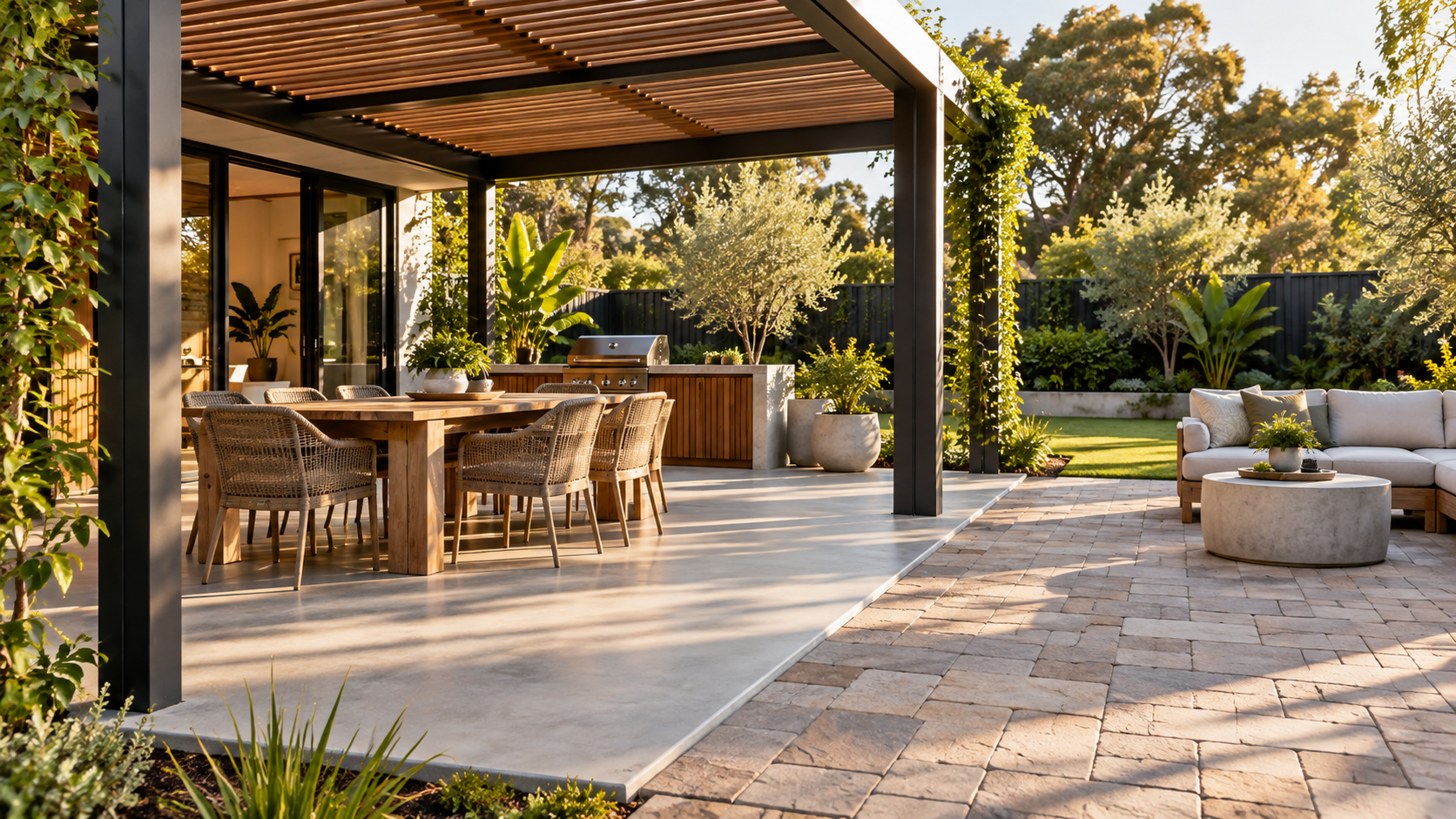
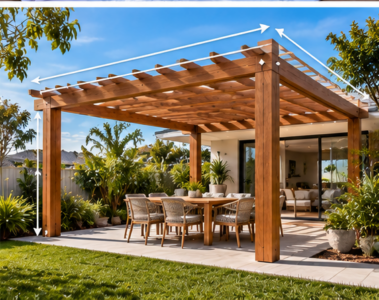
Knowing how to remodel a pergola properly can extend the life of a structurally sound structure without the cost and disruption of a full rebuild. A remodel might be as simple as repainting the frame and replacing worn furniture, or as involved as adding new roofing, screens, lighting or an adjustable louvred system. Either way, the structure itself needs a proper inspection before you choose any finishes or accessories, since a coat of paint or a new roof panel cannot fix a problem with the underlying frame. The right upgrade for your pergola depends on its structural condition, its original approvals, the frame material, its footings and connections, how much weather protection you actually want, your available budget, and your longer-term plans for the property.
Pergola remodelling is the process of repairing, refinishing or upgrading an existing pergola to improve its appearance, comfort and functionality without necessarily replacing the entire structure.
How Do You Assess an Existing Pergola Before Renovating?
Assess the pergola’s structural condition, legal status, drainage and material compatibility before adding new finishes or loads. Repairs should address the actual cause of deterioration, not just cover up the visible symptoms.
Start the inspection at ground level and work up through the load path: footings, post anchors, posts, beams, rafters, bracing, house connections, roofing, and finally the gutters and downpipes.
Work through a proper checklist rather than a glance: confirm the pergola’s approximate age and locate any original drawings, approvals or warranties; check whether it’s attached or freestanding; inspect concrete footings for movement or cracking and post bases for rust, rot or trapped moisture; look for leaning, sagging or twisted framing; inspect timber for softness, splitting and pest damage, check steel for surface rust and section loss, and check aluminium coatings and connections for corrosion; look for loose bolts, brackets, fasteners and missing or inadequate bracing; inspect the house connection for movement; look for roof leaks, ponding and damaged sheets, and check gutters, downpipes and overflow routes; confirm that water drains away from the footings and the house, and identify nearby electrical cables and services; and check whether new screens or roofing would increase wind loads.
Many pergolas built before the 1990s, especially those with older fibro or fixed-roof sheets, may contain asbestos. The Asbestos Safety and Eradication Agency’s guidance for householders and home renovators explains how to check before disturbing any suspect material.
| Observed Condition | Likely Response | Suitable for a Cosmetic Upgrade? |
| Sound frame with faded coating | Clean, prepare and refinish | Usually |
| Minor surface rust | Assess, treat and recoat | Possibly |
| Localised timber checking | Assess moisture and structural significance | Possibly |
| Blocked gutter or poor runoff | Correct drainage before refinishing | After repair |
| Leaking roof junction | Redesign or repair the flashing | Not until resolved |
| Rot at post bases | Determine the extent of timber damage | Usually needs structural repair |
| Significant steel corrosion or leaning posts | Get a structural assessment | No |
| Sagging beams or a cracked house connection | Stop and get a structural assessment | No |
If the existing frame is unsound, spending money on paint, roofing or accessories can delay necessary repairs and increase the eventual cost of replacement.
What Are the Most Affordable Pergola Upgrades?
The most affordable upgrades are generally cleaning, minor repairs, refinishing, lighting, planting and replacing movable furnishings. These changes can lift the pergola’s appearance and comfort without touching the structural frame at all.
Low-cost cosmetic improvements include deep-cleaning the structure and flooring, clearing gutters and downpipes, removing organic growth using material-compatible methods, touching up sound coatings or repainting after proper preparation, replacing worn furniture, adding cushions, container planting or freestanding screens, and adding low-voltage or solar garden lighting.
Mid-range functional improvements include replacing deteriorated non-structural battens, refinishing the entire frame, installing new gutters or downpipes, replacing selected roof sheets, adding professionally designed privacy screens or outdoor blinds, upgrading the flooring, and adding fixed lighting, power points, or a ceiling fan where the structure can support them.
Premium improvements include replacing the complete roof system, strengthening or modifying the frame, adding an outdoor kitchen, installing automated blinds or motorised louvres, replacing deteriorated timber framing with aluminium, and expanding the roof or usable footprint.
| Upgrade | Relative Cost | Structural Review | Potential Benefit |
| Cleaning and decluttering | Low | Usually not | Immediate visual improvement |
| Repainting | Low to medium | Condition check first | Restores appearance and surface protection |
| New furniture | Low to high | No | Improves comfort and layout |
| Fixed electrical lighting | Medium | Licensed electrician required | Improves night-time use |
| Privacy screen | Medium | Often advisable | Adds privacy and manages low-angle sun |
| Outdoor blind | Medium to high | Yes | Improves shade and weather control |
| Roof-sheet replacement | Medium to high | Yes | Improves rain and UV protection |
| Motorised louvred roof | High | Yes | Provides adjustable shade and ventilation |
Work through problems in this order: safety and structural repairs first, then water management, surface protection, shade and comfort, lighting and electrical features, and finally furniture and decoration. Unique Pergolas’ pull-up screens, louvre wall panels and infrared heaters are common add-ons for an otherwise sound structure.
Can You Replace or Upgrade an Existing Pergola Roof?
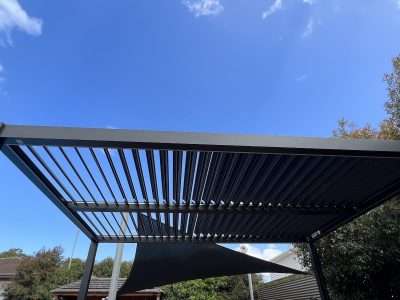
An existing pergola roof can often be replaced or upgraded, but the frame, footings, and connections need checking against the weight, wind uplift and drainage demands of the new system first, not fitted and hoped for the best. There’s a real difference between replacing like for like, changing the roofing material, adding a roof to an open frame, converting to adjustable louvres, extending the roof area, and adding insulation or ceiling linings. Each one changes what the existing frame needs to carry. Options include replacement polycarbonate or metal sheets, insulated roofing panels, translucent sections, fixed timber or aluminium louvres, shade fabric or a retractable canopy, manual adjustable louvres, and a fully motorised louvred roof.
| Roof Upgrade | Main Benefit | Structural Consideration |
| Replacement polycarbonate | Retains natural light | Confirm support spacing and wind fixings |
| Metal roof sheets | Durable rain and shade cover | Check weight, uplift and framing spacing |
| Insulated panels | Improves thermal comfort | Adds weight, may need larger supports |
| Fixed louvres | Creates patterned shade | Adds wind area; angle affects orientation |
| Manual louvres | Adjustable light and ventilation | Needs a compatible structural system and drainage |
| Motorised louvres | Automated weather and light control | Usually needs purpose-designed framing, power and controls |
In broad terms, a roof upgrade means inspecting the existing structure and confirming the original approval and structural documentation, identifying the new roof system and its design loads, checking the beams, posts, footings and house connections against those loads, designing falls, gutters, downpipes and flashing, confirming electrical requirements for powered systems, obtaining any required approvals and engineering, then removing the old roof, completing structural repairs, and installing and testing the new system.
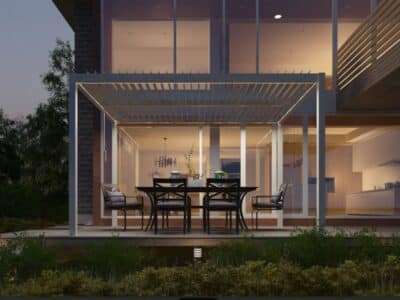
If you’re weighing up an adjustable roof, compare the cost, controls and installation requirements of manual and motorised louvred pergolas, and read our take on whether a retractable or opening roof is actually worth it before deciding whether to convert the existing frame or start again.
How Can You Improve Shade, Privacy and Weather Protection?
Shade, privacy and weather protection can all be improved with roofing, louvres, screens, blinds and landscaping. Still, every addition needs to suit the direction of the sun, wind exposure and the capacity of the structure already in place.
Shade options include fixed battens or louvres, retractable fabric, polycarbonate or insulated roofing, adjustable aluminium louvres, external blinds, and deciduous or climbing plants on their own independent supports. Privacy options include fixed screens or slatted panels, outdoor curtains, retractable blinds, strategic planting, and simply reorienting the furniture. Weather protection can come from solid roofing or adjustable louvres, correctly sized gutters and downpipes, flashing at the house junction, outdoor blinds and windbreak screens, and non-slip flooring with corrosion-resistant hardware.
| Homeowner’s Goal | Suitable Starting Option | Main Limitation |
| Reduce midday sun | Overhead roofing or louvres | Must suit the sun angle and orientation |
| Block the western sun | Vertical screen or blind | Creates additional wind load |
| Retain winter daylight | Retractable roof or adjustable louvres | Higher cost and maintenance |
| Improve privacy | Slatted screen, blind or planting | Check boundaries and overlook |
| Create a rain cover | Solid roof or weather-rated louvres | Needs drainage and a suitable roof fall |
| Use the area at night | Fixed lighting and heating | Electrical and structural requirements apply |
| Create automated control | Motorised louvres and blinds | Needs frame compatibility and power |
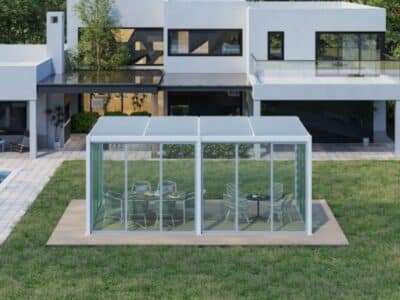
Closing every side of a pergola can change its wind behaviour and may affect how the structure is classified or approved. It can also reduce ventilation around barbecues and outdoor heaters. Unique Pergolas’ pull-up screens and glass sliding doors offer a middle ground, since they can be opened up rather than permanently closing off the space.
When Is Replacing a Pergola Better Than Remodelling It?
Replacement is often more practical when a pergola has widespread structural deterioration, inadequate footings, an unsafe house connection, or a frame that simply cannot support the upgrades you actually want.
Watch for extensive timber rot or termite damage, significant steel corrosion, multiple leaning posts or widespread footing movement, sagging beams or roof members, repeated leaks caused by poor roof geometry, an unsafe or unverified house connection, a frame that is incompatible with the roof system you want, and repair costs approaching what a full replacement would cost.
| Existing Condition | Remodel May Be Suitable | Replacement May Be Better |
| The frame is structurally sound | Yes | Usually unnecessary |
| Finish faded, substrate sound | Yes | No |
| Roof sheets are locally damaged | Often | If the complete system has failed |
| Localised timber deterioration | After assessment | If damage is widespread |
| Footings have moved | Only with engineered repair | Often |
| Beams are sagging | Only after structural assessment | Often |
| Motorised louvres are desired | If the frame is verified and adaptable | Often, if a purpose-designed system is needed |
Cost Comparison Framework
Published renovation prices vary too widely between suppliers, regions, and scopes of work to quote a reliable national figure here, so treat the relative costs below as a starting point and confirm your own itemised quote locally.
| Project Level | Typical Inclusions | Relative Cost |
| Cosmetic refresh | Cleaning, preparation, repainting and styling | Low |
| Minor functional upgrade | Selected roof repairs, gutters or basic screening | Low to medium |
| Mid-range renovation | New roof sheets, flooring, lighting and screens | Medium to high |
| Major structural renovation | Frame strengthening, new roofing and drainage | Quote required |
| Motorised louvred upgrade | Purpose-designed roof, controls and electrical work | Quote required |
| Complete replacement | Demolition, new structure, footings, roofing and drainage | Quote required |
Whatever level you’re planning, confirm whether the quote includes inspection, design, engineering, approval fees, demolition, waste disposal, structural repairs, roofing, flashing, guttering, electrical work, painting, flooring, installation and GST.
Compare the total cost of achieving the result you actually want, not just the cost of patching the visible damage. A cheaper renovation can be poor value if it leaves an unsuitable layout, ageing footings or limited roof options in place.
Budget Planning Checklist
Before you commit to a figure, work through this checklist rather than reacting to the first quote you receive:
- Decide which problems must be solved.
- Separate essential repairs from optional improvements.
- Set a maximum total budget.
- Allow a contingency for hidden deterioration.
- Obtain an inspection before choosing premium finishes.
- Confirm whether engineering or approval is required.
- Request an itemised quote.
- Check what demolition and disposal include.
- Confirm whether painting and electrical work are included.
- Compare the renovated structure’s expected life with a new system.
- Consider future blinds, lighting, heaters and solar equipment now, even if you install them later.
- Check product and workmanship warranties.
- Avoid buying accessories before confirming the frame’s capacity.
How to Remodel a Pergola With Confidence
Knowing how to remodel a pergola properly starts with an honest assessment of the frame, not the finish. A structurally sound pergola can often be refreshed, reroofed, or upgraded with louvres, screens, or lighting for a fraction of the cost of a full rebuild. Still, a frame with genuine structural problems needs those issues addressed first, or replacement may be the better long-term value.
Arrange a professional assessment to identify which parts of your existing pergola can be retained, which repairs should come first, and whether a roof or motorised louvre upgrade suits your structure and budget. Browse the current range of aluminium pergola kits or get in touch with the team with photos of your existing structure.
Frequently Asked Questions
Do You Need Approval to Renovate an Existing Pergola?
Approval depends on your location, the pergola’s original approval, the scope of the renovation, and applicable planning rules. Cleaning and repainting usually don’t require approval, but changes to the roof, dimensions, height, structural frame, or house connection can trigger additional requirements. Heritage, bushfire, strata and boundary controls can also apply. Check your original documentation and confirm the proposed work with your council or certifier before any structural alterations begin; our state-by-state guide to pergola council approval is a good starting point.
Can an Old Timber Pergola Be Converted to Aluminium?
A timber pergola can sometimes be partially or completely replaced with aluminium, but this is usually more than a cosmetic swap. The footings, post locations, spans, connections and roof loads all need to suit the new material, and mixing materials means managing compatible connections and corrosion. If most of the primary timber members need replacing anyway, a new purpose-designed aluminium pergola can be safer, cleaner and better value than progressively rebuilding the old frame.
How Much Does It Cost to Upgrade a Pergola?
The cost depends on the pergola’s condition and the scale of the upgrade. Cleaning and repainting are relatively affordable, while new roofing, screens, electrical features and structural repairs cost more, and motorised louvres or major frame alterations usually need a tailored quote. Any figure you’re given should state whether preparation, engineering, approvals, demolition, drainage, electrical work and GST are included. A site inspection is needed to catch any hidden deterioration before you commit to a budget.
Can Motorised Louvres Be Added to an Existing Pergola?
Only when the existing frame, posts, footings, and connections can support the new system’s weight, movement, and wind loads. Many older pergolas weren’t designed for this and may need strengthening or full replacement first. The conversion also needs integrated drainage, suitable electrical work and compatible controls. A specialist can compare modifying the old structure with installing a complete, purpose-designed louvred pergola, so you can see which offers better value.
Which Pergola Improvements Add the Most Practical Value?
The most useful improvements are the ones that fix current problems and increase how often you actually use the space. Structural repairs, effective drainage, and durable protective coatings should come first, since they protect everything built afterwards. Shade, rain cover, lighting, privacy screens and a level floor then improve comfort and functionality. Automation is worth considering when adjustable light and weather control matter to you, but only once the existing structure has been confirmed as suitable for it.