Blog
Best Pergola Design Ideas for Small Backyards and Narrow Side Areas

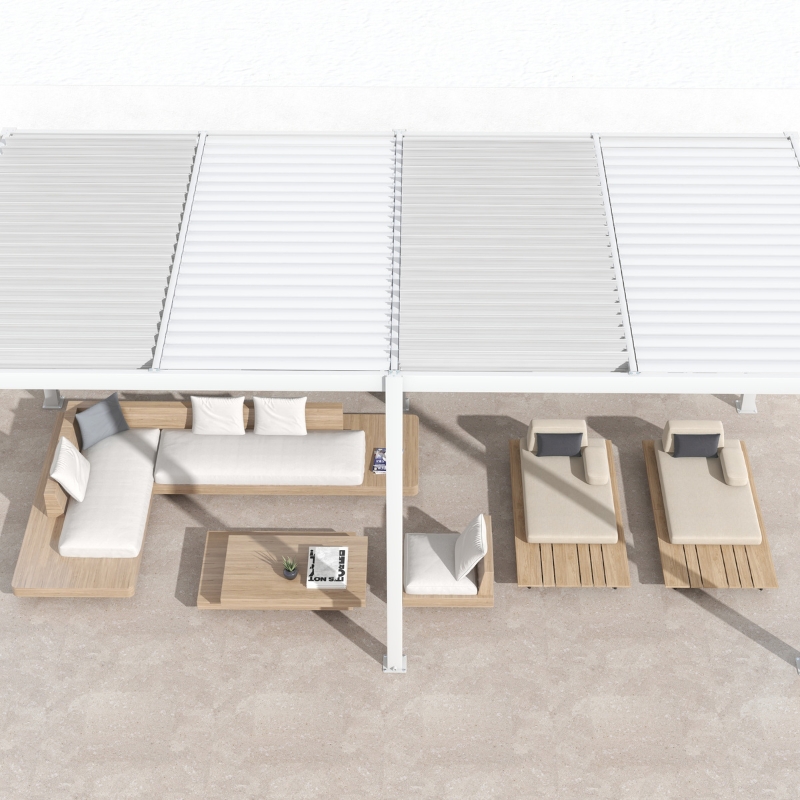
Small backyards and narrow side areas can be the most frustrating parts of an Australian home. They’re often too tight for “big backyard” ideas, yet they’re exactly where you want shade, privacy and somewhere to sit when the weather’s good.
The trick is to stop thinking of a pergola as a big, standalone structure and start treating it like a space-planning tool. Done well, a pergola can:
• make a narrow side yard feel like a purposeful outdoor corridor, not a leftover gap
• turn a small paved area into a usable “outdoor room”
• create privacy without blocking all the light
• add weather protection where you actually need it (doorways, paths, seating)
And in tight spaces, wall-attached designs (often called wall-mounted or “lean-to” styles) can be especially effective because they use the house line to save footprint and keep the layout clean. If you want to see examples while you read, browse wall-mounted pergola designs and compare them to the layouts below.
Start with the three constraints that decide everything
In small or narrow outdoor areas, design is less about “what looks nice” and more about working with constraints. Nail these first, and the rest gets easier.
1) Circulation: how people move through the space
A pergola that blocks a path is a pergola you’ll resent. In side yards, you’re often dealing with bins, side gates, clotheslines, heat pumps, taps, meters, garden sheds, and the simple reality that people need to walk through comfortably.
Ask:
• Where do doors swing out?
• Do you need clear access to a side gate or meter box?
• Will you carry items through here (bikes, prams, surfboards, rubbish bins)?
2) Sun, heat and weather exposure
Australian sun is no joke, and tight courtyards can turn into heat traps. Your shade approach should match your climate and how you use the space.
Ask:
• Is the harsh sun coming from the west in the afternoon?
• Does wind funnel down the side of the house?
• Does rain blow in from one direction?
3) Water and runoff
Small areas show water problems quickly: puddles, overflow, and splashback near doors. If you’re adding roof coverage, think early about where water goes.
Ask:
• Does the paving fall away from the house?
• Where does stormwater currently run?
• Will a roofed section change runoff patterns?
The small-space pergola layouts that work best
These are the layouts that repeatedly deliver in compact Australian backyards, courtyards and side paths.
Corner pergola: the “outdoor nook” that doesn’t shrink the yard
If your backyard is small, covering the whole thing can make it feel even smaller. A corner pergola creates a defined seating or dining zone while keeping the rest open.
Why it works:
• You keep sightlines across the yard (so it feels bigger)
• You can anchor furniture without it floating awkwardly
• You can add screening on two sides for privacy
Best for:
• small lawns where you still want green space
• courtyards where you want a cosy lounge corner
Side-return pergola: coverage where you actually live
Many homes have a back door that opens onto a skinny strip of paving that’s technically an “outdoor area” but never feels comfortable. A side-return pergola covers the transition zone from inside to outside so the space feels like a natural extension of the home.
Design moves that help:
• keep posts minimal and aligned with edges
• Use a lighter roof treatment near windows to preserve daylight
• build in a bench or slim bar ledge rather than bulky furniture
If you’re leaning toward a wall-attached approach to keep the footprint tight, explore wall-mounted pergola options and notice how they simplify the layout by using the house wall as the “spine” of the structure.
Passage pergola: turning a narrow side yard into a usable “outdoor lane”
A narrow side yard can feel like a service corridor, but with the right pergola approach, it can become a shaded walkway, a plant-lined retreat, or even a compact entertaining strip.
What makes it work in narrow spaces:
• keep the centreline clear for walking
• use vertical elements (screens, battens, climbing plants) instead of bulky planters
• place lighting and greenery along one side to avoid “tunnel” clutter
Best for:
• long, skinny side yards with decent height clearance
• homes where the side yard is the main access to the backyard
Courtyard pergola: the “light control” approach
Courtyards often have the opposite problem to open backyards: too much reflected heat, or too little breeze, or neighbours overlooking from multiple directions. Here, the pergola design is about controlling light and privacy without making the space gloomy.
Good options:
• slatted or batten-style overhead to dapple light
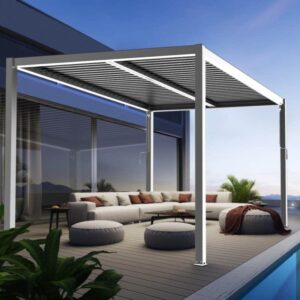
• adjustable louvre systems if you need flexible sun and rain control
• partial coverage (not full roof) to balance shade and daylight
Roof and overhead ideas that suit tight spaces
In small areas, your overhead choice changes the feel more than almost anything else. The right roof can make a tiny space feel airy; the wrong roof can make it feel boxed in.
Slatted battens for “shade without darkness”
Slats give visual structure and partial shade. They’re also great for creating a design feature in a narrow space where you don’t have room for lots of extras.
Use slats when:
• you want airflow and brightness
• you’re aiming for a relaxed, coastal or contemporary look
• You plan to add vines for seasonal shade
Polycarbonate or similar light-transmitting roofing for rainy climates
If you want real rain cover but don’t want to lose light, translucent roofing can work well—particularly near doors or windows.
Small-space tip:
• consider combining solid cover over seating + lighter cover near windows to protect daylight
Insulated roof panels for heat control
If your small backyard bakes in summer, insulated panels can reduce heat build-up under the covered area. This can be especially useful in courtyards where heat reflects off walls and paving.
Retractable shade for flexibility
In some small spaces, you don’t need full-time coverage. Retractable shade (like sails or awning-style solutions) can let you open the space in winter and shade it in summer.
Privacy ideas that don’t make the area feel closed in
Privacy is often the number-one reason people upgrade small outdoor spaces, especially in newer suburbs with close setbacks.
Vertical screens where they matter most
Instead of screening everything, screen only the lines of sight that actually bother you:
• neighbour windows that look directly into the seating
• the side boundary where you feel exposed
• the angle from an upper storey
Mixed screening for a softer look
Hard screens can feel heavy in tight areas. Mixing materials helps:
• slatted screen + climbing plant
• low planter + taller screen behind
• alternating solid and open sections
Planting that suits narrow strips
In narrow side yards, go vertical:
• climbers on trellises
• narrow pots aligned along one edge
• wall-mounted planters (if you need floor space clear)
Make small spaces feel bigger with these design tricks
You can’t add square metres, but you can change how the space feels.
Keep posts and structure visually “light”
In compact yards, chunky elements dominate. Clean lines and thoughtful placement help the eye move.
Ideas:
• align posts with corners and edges (not mid-space)
• keep the centre open
• avoid unnecessary cross-bracing where possible
Use built-ins instead of bulky furniture
A built-in bench can give you seating without swallowing the floor area. In side yards, a slim bar ledge can create a “coffee spot” without blocking flow.
Create one strong focal point
Small spaces feel messy when there are too many “features.” Choose one:
• a feature privacy screen
• a statement light fitting
• a vertical garden panel
• a compact outdoor kitchen module (only if space truly allows)
Q&A: What type of pergola is best for a small backyard?
For most small backyards, the best pergola is one that creates a defined zone without covering the entire yard. Corner layouts and partial-coverage designs usually work better than a full-roof structure. If your goal is to keep floor space open, a wall-attached style can reduce the footprint and simplify the layout, particularly near doors and paved areas.
Q&A: How do you make a narrow side yard feel usable (not like a tunnel)?
Focus on three things:
• keep a clear walking line through the centre
• use vertical elements (screens, slats, climbers) rather than floor-hogging décor
• add lighting at eye level or overhead to create warmth and intention
Even a simple overhead structure can change the psychology of the space: it stops feeling like “the gap beside the house” and starts feeling like a designed outdoor lane.
The “narrow side yard” checklist before you commit to a design
Walk outside with a tape measure and answer these before you fall in love with a look online.
Measure and note:
• the narrowest width (fence to wall)
• door swings and window openings
• the location of taps, meters, hot water systems, heat pumps
• access needs (bins, bikes, garden equipment)
• existing drainage points and the fall of paving
• where you need shade most (morning vs afternoon)
• where privacy is most important (seating vs walkway)
If you’re considering attaching a structure to the home, it’s also sensible to familiarise yourself with the general framework behind building standards in Australia via the Australian Building Codes Board.
Design ideas specifically for narrow side areas
These are “tight space” patterns that work well along the side of a house.
1) The “covered threshold”
A short covered section right outside a door gives you:
• a sheltered step-out zone
• somewhere to take off shoes or put down bags
• protection from rain when unlocking the door
2) The “plant spine”
Pick one side (usually the fence side) and make it the planting side:
• slim planters in a straight line
• vertical trellis panels
• climbers to soften hard edges
Keep the other side clear so the corridor stays functional.
3) The “screened seating pocket”
If your side yard widens slightly at one point, turn that bulge into a micro-zone:
• a small bench
• a privacy screen
• a small table or ledge
This creates a destination without blocking the route.
4) The “light lane”
Lighting makes narrow spaces feel safer and more inviting.
Options:
• warm downlights overhead (spaced evenly)
• wall lights to visually widen the corridor
• subtle step/path lights to guide movement
Q&A: Do you need council approval for a pergola in Australia?
Sometimes. Requirements vary by state, territory and local council, and can depend on factors like size, height, proximity to boundaries, and whether it’s considered roofed/solid. The safest approach is to treat approvals as a design input, not an afterthought—especially in tight side yards where boundary proximity is common.
Connecting the design ideas back to wall-mounted pergolas
In small backyards and narrow sides, wall-mounted (attached) pergolas often shine because they:
• reduce the number of posts needed in the usable area
• keep the centre of the space clearer
• create a clean line that can make the home and outdoor area feel more integrated
• work well for “threshold coverage” near doors and for long side-yard runs
If you’re mapping out what an attached approach could look like for your layout, it helps to review examples of wall-mounted pergola installation styles and note how the structure uses the wall line to save space.
Practical finishing touches that matter in compact spaces
Lighting
In small areas, lighting is both function and ambience:
• task lighting near doors and BBQ areas
• softer lighting near seating
• avoid glare that bounces off light-coloured walls
Ceiling fans and airflow
If your space is enclosed by fences and walls, airflow can be limited. Where appropriate, airflow-friendly roof choices plus smart layout (not blocking breezes with solid screens everywhere) can improve comfort.
Storage without clutter
Try:
• a slim storage bench
• wall-mounted hooks for garden tools
• concealed storage along the fence line
FAQ
What’s the minimum size for a pergola to feel comfortable?
It depends on what you want underneath it. A small seating nook can work in a surprisingly compact footprint, while dining needs more room for chairs to pull out. In narrow side yards, prioritise a clear walking line first, then add a seating pocket only where the width allows.
Are slatted roofs better than solid roofs for small spaces?
Slats often feel lighter and keep spaces brighter, which is great in compact areas. Solid roofs provide better rain protection. Many small-space designs work well with partial solid coverage over the “use zone” and lighter coverage near windows and garden edges.
How do I add privacy without making a courtyard dark?
Use targeted screening, not full enclosure. Combine screens with plants, vary height, and keep at least one side visually open if possible. Slatted screens can block sightlines while still letting light through.
What pergola style suits townhouse courtyards?
Townhouse courtyards often benefit from clean-lined, space-efficient designs with strong privacy planning. Wall-attached layouts can reduce posts and keep the courtyard floor clearer, while vertical planting can soften boundaries.
How do I stop a narrow side pergola area from feeling cramped?
Avoid clutter, keep the centreline clear, use vertical features, and add lighting. Visually “light” structures, consistent lines, and one strong focal point help the space feel intentional and open.
What should I measure before choosing a pergola idea online?
Measure width at the narrowest point, door swings, service locations, drainage fall, and the exact zone where you need shade and privacy. Those measurements will quickly filter out ideas that only work in larger yards.