Blog
Poolside Pergola Sizing: Keeping Shade Where You Need It Without Blocking Breezes

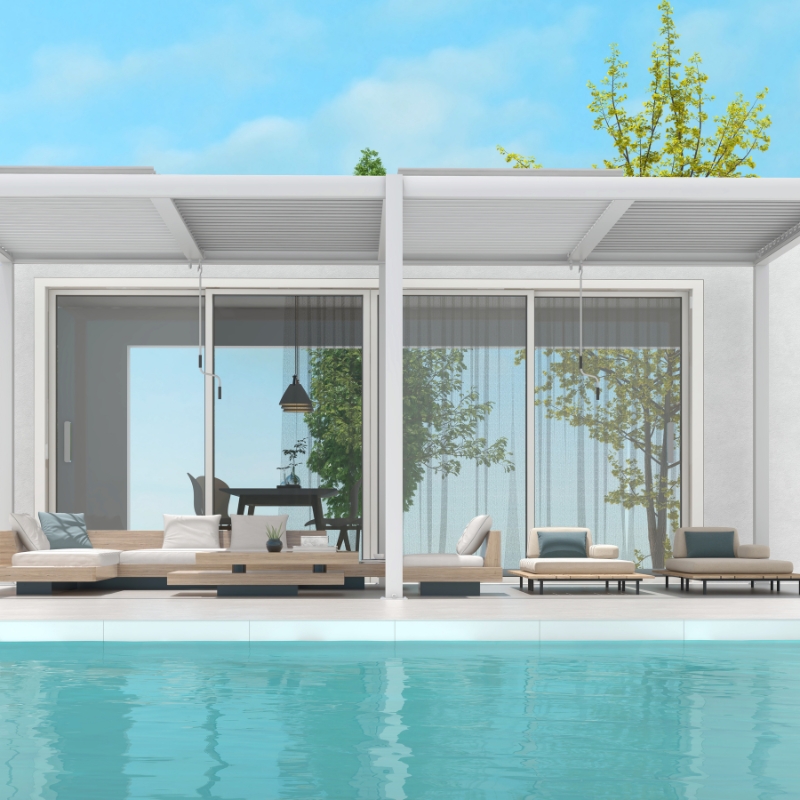
A pool can be the best part of an Aussie backyard… until the mid-arvo sun turns the paving into a hotplate, the glare is blinding, and everyone ends up indoors. The usual reaction is “we need more shade” — often leading homeowners to look into options like manual pergolas — but poolside shade is a bit different to shading a patio.
You’re dealing with:
• Strong sun from multiple angles
• Reflected UV and glare off the water (so shade placement matters more than you think)
• Cooling breezes you don’t want to accidentally block
• Wet zones, splash zones and traffic flow (kids running, trays of food, towels everywhere)
This guide will help you plan a poolside pergola footprint that shades the right spots at the right times, while still letting air move through the space. And yes — we’ll connect it back to manual pergolas so you can see how adjustable shade can make a pool area far more usable without “overbuilding” the structure.
Start with what you’re actually trying to shade
Before you measure anything, decide your shade priority. Most pool areas have three “comfort targets”, and you’ll size differently depending on which matters most.
1) Lounging shade (most common)
This is shade over:
• sun loungers
• daybeds
• a low table or drink ledge
• a walkway behind the loungers so people aren’t squeezing past wet feet
2) Social shade (snacks, chats, supervision)
This is the shaded spot where people naturally gather:
• a small outdoor lounge set
• a bench along a wall
• a standing bar area
• a place to watch kids in the pool without squinting
3) Water-edge shade (least common, but useful)
Some people want shade that reaches the pool edge (or even covers a portion of the water). It can be great for:
• cooling the pool edge
• giving kids a shaded entry zone
• reducing the “no shade anywhere” problem in the hottest months
It can also create downsides if you’re not careful:
• it can block breezes across the water
• it can make the pool area feel enclosed
• it can increase drip/splash issues if the structure is too close
Quick answer
If you’re unsure, prioritise lounging shade first. Most families get the best “everyday value” by shading the seats and the people, not trying to shade the entire pool.
Understand why poolside shade needs more coverage than you expect
Even with a solid overhead cover, you can still cop UV from indirect angles. Water and light paving can reflect UV and glare back up into your face, so a “small” shade patch can feel ineffective if the sun is coming in low.
A helpful mental model:
• At midday, overhead shade does most of the work
• In the morning and late afternoon, you need either a deeper overhang, side screening, or adjustable coverage to stop the low-angle sun
If you want a credible baseline for why shade design matters (including indirect UV), the Cancer Council has clear guidance on shade as part of sun protection. See: Cancer Council NSW — Shade
Map your poolside zones before you choose a pergola size
Grab a tape measure (or a rough site plan) and sketch four zones:
• Wet zone: splash-out area + where people drip dry
• Dry lounge zone: where you want cushions, towels, phones, and snacks
• Walkway zone: how people move from house → pool → seating
• Wind path: the direction breezes usually come from (summer arvos especially)
If you only size for the furniture footprint, you’ll usually under-size the shade.
A practical sizing method that works in most Aussie backyards
- Mark your furniture “footprint”
- Add clearance for comfort
- Decide the time-of-day shade target
- Check you haven’t blocked the breeze corridor
Let’s run through each.
Step 1: Work out your furniture footprint (real numbers, not vibes)
Two loungers (a very common poolside setup)
Typical sun lounger sizes vary, but planning works best if you assume:
• each lounger needs roughly 0.7–0.8 m wide
• around 2.0 m long
• plus a small gap between them
A practical footprint for 2 loungers + a small side table is usually about:
• 1.8–2.2 m wide
• 2.2–2.6 m deep (once you include a table and some breathing room)
Four loungers (family + friends)
For 4 loungers, most people choose either:
• two pairs side-by-side, or
• a “face each other” arrangement with a central table
Either way, you’ll want a larger shaded rectangle so the shade doesn’t only cover your ankles at 3 pm.
Seating set (poolside chats)
If you’ve got an outdoor lounge set, your footprint depends on the shape, but the same concept applies:
• seat footprint + table footprint + circulation
Step 2: Add the clearances that make it feel “easy to use”
This is where poolside planning wins or loses. If you don’t add clearance, the pergola might “fit”, but you won’t enjoy it.
Use these practical allowances:
• 0.8–1.0 m behind loungers for a comfortable walkway
• 0.6–0.8 m beside furniture where people pass through
• Extra space near the BBQ/serving area if it’s part of your pool zone (even if the BBQ isn’t under the pergola)
If you’ve ever tried to carry drinks past a lounger while someone’s towel is on the ground, you already know why this matters.
Q&A: How much space should I leave behind pool loungers?
Aim for about 0.8–1.0 m if you want adults to walk behind loungers without turning sideways. If your pool area is tight, 0.7 m can work, but it will feel narrow when people are carrying towels or trays.
Step 3: Decide your shade target time (this changes the “right size”)
Ask one question: when do you actually use the pool area most?
Common answers:
• Late morning to early afternoon (weekends)
• Mid-to-late afternoon (after school/work)
• All-day entertaining (BBQs and birthdays)
Shade behaves differently across the day. Even if you don’t get technical with sun angles, you can plan intelligently:
• If you want midday comfort, overhead coverage is the main game
• If you want late afternoon comfort, you need deeper coverage or a way to manage low sun
This is where adjustable roof systems can shine — you can tweak the louvres to balance sun, shade and airflow rather than relying on a fixed roof that is “right” for one time of day only.
If you’re comparing roof styles, start by exploring a pergola kit for outdoor shade and think about how adjustable shade could help you manage both glare and breeze across different times of day.
Step 4: Keep breezes moving (so you don’t build a heat box)
Pool areas feel best when air can move across:
• the water surface
• your seating zone
• your exit path back to the house
A pergola can either help airflow or kill it, depending on placement and side treatments.
What blocks breezes most?
• Solid walls or fixed screens on the windward side
• Long, continuous structures that cut across the breeze corridor
• Placing the pergola too close to fences or tall hedges so air can’t “wrap around”
What keeps it breezy?
• Leaving at least one side open to the prevailing summer breeze
• Using partial screening only where needed (privacy or low sun)
• Choosing a roof style that can be adjusted for airflow on hot days
Q&A: Can a pergola make my pool area hotter?
Yes, if it blocks cross-breezes or traps hot air under a fixed roof. Good design keeps a “wind corridor” open and avoids boxing the space in with solid side panels on every face.
Poolside pergola sizing scenarios (copy these layouts)
Below are practical “scenario templates” you can adapt, without turning this into a one-size-fits-all rule.
Scenario A: Shade for 2 loungers + walkway
Best for: smaller pool decks, plunge pools, courtyard pools
Planning approach:
• Measure the loungers + small side table
• Add a walkway behind the loungers
• Make the pergola deep enough that shade still hits bodies in the mid arvo
Key idea:
A slightly deeper cover usually beats a wider-but-shallow cover for late-day comfort.
Scenario B: Shade for 4 loungers (two pairs)
Best for: families who use the pool constantly in summer
Planning approach:
• Create a “lounger zone” rectangle
• Keep at least one side open to the breeze
• Consider whether the afternoon sun comes from the fence side (common) and whether you need partial screening
If you’re leaning toward adjustable shade control, have a look at manual pergola options for homes and consider how louvre angle can reduce glare without shutting down airflow.
Scenario C: Social shade + supervision zone (not just loungers)
Best for: entertaining, kids’ pool parties, weekend BBQ culture
Planning approach:
• Shade where people sit and talk
• Ensure a clear line of sight to the pool
• Keep the main traffic path (house ↔ pool) uncluttered
• Don’t place posts where people naturally walk
This is often the “sweet spot” design: shade the people, keep the pool open, and let breezes do their job.
Scenario D: Pool-edge shade (strategic strip)
Best for: very sunny sites, little natural shade, long pool runs
Planning approach:
• Provide a shaded strip for entry/exit or seating right near the edge
• Keep clearance so splash and wet traffic don’t constantly soak the structure zone
• Avoid enclosing the pool — you want air movement and openness
Don’t forget the “wet reality”: distance from the pool edge
You don’t need a hard rule here, but you do need to think about:
• splash patterns (kids are chaos)
• where towels drip
• slip risk if the shaded area encourages people to congregate in the wettest zone
• cleaning and maintenance
A smart approach is to set the pergola over the dry lounge/social zone rather than directly over the wettest strip of paving.
Q&A: Should a pergola go right next to the pool?
Usually, it’s better to shade the seating zone slightly back from the edge, then design the layout so people naturally move from pool → towel → shaded seat. Putting it right on the edge can create a crowded wet zone and can interfere with airflow over the water.
How to test shade placement before you commit
You don’t need fancy software. Try one (or more) of these low-tech methods:
• Umbrella test: move a large umbrella through the day and note where shade is most valuable
• Chalk/marker test: mark where loungers and seating will go, then check how the sun hits those positions at different times
• Phone compass + breeze check: note where the breeze comes from on typical hot days (especially mid-to-late afternoon)
You’re looking for the “comfort moment”:
• shade hits where people actually sit
• you still feel air movement
• glare is reduced enough that people aren’t squinting
Low sun and glare: the poolside problem most sizing guides ignore
Generic pergola size guides rarely talk about glare, but pool glare is a big deal.
What to do about it (without turning the pergola into a bunker):
• Plan for deeper coverage if afternoons are the main use time
• Use partial screening only where the low sun is coming from
• Think about the surface finishes around the pool (very light paving can bounce glare)
Where manual pergolas fit in (without the sales pitch)
If your pool area is used in different ways across the day, a fixed “perfect size” is hard — because the sun changes angle, and breezes change direction.
Manual louvre systems can help because you can:
• open for airflow on hot days
• angle to reduce glare at low sun
• close more during intense midday sun
• fine-tune comfort without needing to massively oversize the structure
If you’re planning around posts, access and drainage pathways, it’s worth understanding manual pergola installation considerations early so your layout stays practical, walkable and easy to live with.
Practical planning checklist (poolside edition)
Use this as a final run-through before you lock a size:
• What exactly are you shading: loungers, seating, walkway, or an entry strip?
• Does the shaded area stay useful in the mid arvo (not just at midday)?
• Have you allowed a comfortable walkway behind loungers and seating?
• Is at least one side open to the prevailing summer breeze?
• Will low sun hit under the roof from the west or north-west in summer?
• Are you keeping the wettest splash zone from becoming the main “hangout” spot?
• Have you left room for future add-ons (privacy screen, small bar, storage bench)?
Common mistakes that make a poolside pergola feel wrong
Making it too shallow
A shallow structure might shade feet at 3pm but not bodies. People will still drag loungers into the sun because “the shade isn’t doing anything”.
Blocking the breeze with walls/screens everywhere
Privacy is great. Stagnant hot air isn’t. Be selective about screening.
Putting posts where people naturally walk
It sounds obvious, but it’s common. Pool traffic is fast and messy — posts in walk lines become shin magnets.
Trying to shade the entire pool
It often leads to an oversized, enclosed feel and can reduce the open-air vibe that makes pools enjoyable.
Final FAQ
How big should a poolside shaded area be for two loungers?
Big enough for the loungers plus a small table and a walkway behind them. Most people undersize by forgetting circulation space. Start with the furniture footprint, then add about 0.8–1.0 m behind loungers for comfortable movement.
How do I get afternoon shade by the pool?
Afternoon comfort usually needs deeper coverage or a way to manage low-angle sun. Testing shade positions at the times you actually use the pool will help you avoid building shade that only works at midday.
Will a pergola stop breezes around my pool?
It can, especially if you add solid side panels on the windward side or place it across the natural wind corridor. Keep at least one side open to the prevailing summer breeze and avoid boxing the space in.
Is shade still important if I’m not sitting in direct sun?
Yes. Indirect UV can still reach you even when you’re under shade, especially around water and light hard surfaces. That’s why shade design is a key part of sun protection in Australia.
Should I shade over the pool or beside it?
Most homes get better day-to-day use by shading the people (loungers and social seating) beside the pool, rather than trying to cover the water. Pool-edge shade can work as a strategic strip, but it needs careful placement to avoid blocking airflow.