Blog
How to Stop Condensation on Outdoor Glass in Aussie Conditions

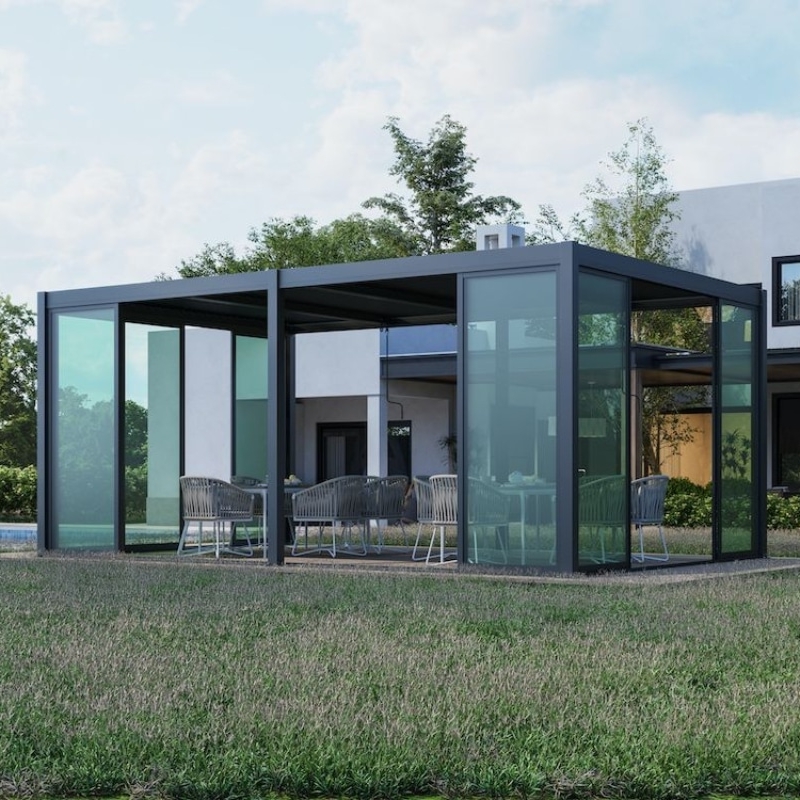
If your outdoor glass looks foggy, “sweaty”, or even dripping on certain mornings, you’re not alone. Across Australia, condensation on outdoor glass is common in covered alfresco areas, pergolas, and outdoor rooms — especially when nights are cool, mornings are humid, or airflow is limited.
The good news is that most condensation issues are manageable once you understand what’s actually happening. This guide walks you through the real causes (in plain English), how to tell condensation from a leak, and the practical fixes that work in Australian conditions — from quick, no-cost changes through to longer-term upgrades.
What condensation on outdoor glass actually is
Condensation forms when moist air touches a surface that’s colder than the air’s “dew point”. The air can’t hold onto all that water vapour anymore, so the moisture turns into liquid water on the glass.
Outdoor areas make this more confusing because:
• The glass can cool down fast overnight (especially under clear skies)
• Covered alfresco zones can trap humid air with limited cross-ventilation
• Morning humidity can spike even when it hasn’t rained
In other words, if the glass is colder than the dew point, it will “sweat”.
Why is it so common under pergolas and covered patios
Covered areas often have a microclimate:
• Less breeze to move moist air away
• Warm daytime air gets trapped, then cools quickly at night
• Outdoor cooking, pot plants, wet paving, and even a clothes airer add extra moisture
That’s why condensation can be worse under cover than out in the open.
Quick answer: Is it a problem or just annoying?
Occasional morning fogging that clears as the day warms up is usually normal. It becomes a problem when:
• Water regularly pools in tracks or on sills
• You’re seeing mould or musty smells
• The glass stays wet for long periods
• It’s happening on the “wrong” side of the glass for the conditions (a clue that something else is going on)
Condensation vs leak vs rain ingress (the 2-minute diagnosis)
Before you start sealing anything, work out what you’re dealing with.
1) Signs it’s condensation
• Happens after cool nights and humid mornings
• Appears as a uniform mist or fine droplets
• Clears when the sun hits the area or the airflow increases
• Often worse when the space is closed up overnight
2) Signs it might be wind-driven rain ingress
• Water appears during storms or strong wind events
• Wet patches align with a particular corner, edge, or gap
• You see splatter marks, not a uniform fog
• Only occurs when rain is blowing from a certain direction
3) Signs it might be a drainage/track issue
• Water collects in the bottom track and doesn’t drain
• You notice grit, leaves, or “muddy” build-up
• The glass looks wet at the bottom even on otherwise dry days
• You find blocked weep holes or debris at outlet points
Q&A
Q: My outdoor glass is wet, but it hasn’t rained — does that mean it’s leaking?
Not necessarily. If the wetness appears as misting or fine droplets and shows up after cool nights or humid mornings, it’s usually condensation. Leaks tend to be directional (specific spots) and associated with rain and wind.
Why is condensation worse in Australian climates
Australia’s weather swings make condensation more likely than many people expect.
Humid coastal air (QLD/NSW coast, parts of WA/SA)
Coastal air often carries high moisture even when temperatures are mild. If your outdoor area cools quickly overnight, the morning dew point can be reached easily.
Cool nights + sunny days (VIC, ACT, TAS, inland NSW/QLD)
Cold nights chill the glass. Morning air warms and holds more moisture — but the glass may stay colder longer in shaded, covered spaces. Result: fogging that can last into mid-morning.
Wet season/storm build-up humidity
When humidity stays high for days, surfaces struggle to dry. Even small ventilation issues become noticeable.
If you want the building-science version, the Australian resource at YourHome’s condensation guide explains dew point, ventilation, and moisture control in a practical way.
The 3 levers that reduce condensation
Almost every solution falls into one of these categories:
• Increase airflow (move humid air away from the glass)
• Reduce moisture in the air (remove sources and help the space dry faster)
• Keep the glass surface warmer (or reduce rapid overnight cooling)
You don’t need to do everything. Usually, one or two targeted changes make a big difference.
What to do today (fast, low-cost fixes)
1) Create reliable cross-ventilation
If your alfresco is enclosed most of the time, trapped air is your enemy.
Try:
• Open opposing panels/doors a small amount overnight (even 10–20 mm helps)
• In the morning, open everything for 10 minutes to flush humid air out
• If privacy or security is a concern, use a small “vent gap” on the least exposed side
2) Use a fan to move air across the glass
Air movement matters more than you think. A ceiling fan on low overnight or a pedestal fan aimed across the glass can reduce the boundary layer of humid air that clings to cold surfaces.
Practical tips:
• Run on low for longer, rather than blasting for 10 minutes
• Point airflow along the glass line, not directly at one small spot
• Keep the space slightly vented so moist air has somewhere to go
3) Reduce moisture sources in the space
This is the sneaky one. Common moisture contributors in outdoor rooms:
• Wet outdoor mats and rugs
• Recently washed paving or decking
• Pot plants clustered right next to glass
• Covered bar fridges/ice baths venting moisture
• Drying clothes under cover (big humidity spike)
Simple changes:
• Shift plants a little away from the glass line
• Dry mats in the sun, not under cover
• Avoid drying laundry in enclosed alfresco areas overnight
Q&A
Q: Would a dehumidifier work in an outdoor room?
Sometimes, but only if the space is reasonably enclosed and you’re not constantly letting humid outside air pour back in. For most alfresco zones, airflow + moisture-source control usually gives better value than trying to dehumidify “the outdoors”.
Cleaning and maintenance that prevents “false condensation”
Sometimes what looks like condensation is actually water lingering because drainage isn’t doing its job.
4) Clean tracks and check drainage points
Grit, leaves, and fine dust (hello, Aussie winds) can block drainage pathways. That trapped water then re-wets the glass and makes the whole problem look worse.
Do this:
• Vacuum loose debris from bottom tracks
• Wipe with a damp cloth, then dry
• Check for weep holes/outlets and clear them gently (a zip tie or soft brush is safer than metal tools)
• After cleaning, pour a small cup of water into the track and confirm it drains the right way
5) Replace tired seals and check for small gaps
Worn seals don’t cause condensation directly, but they can:
• Let wind-driven mist in
• Reduce your ability to manage airflow intentionally (air leaks where you don’t want them)
If you see cracked or flattened seals, put them on the maintenance list.
Q&A
Q: Why is water pooling in the bottom track even on a dry day?
That’s often a drainage issue: debris blocking outlets, a slightly out-of-level track, or build-up that holds water like a sponge. Cleaning and confirming proper drainage is a good first step before assuming the glass is “creating” all the moisture.
What to do this week (high-impact improvements)
6) Add shade or reduce night-sky cooling
Clear night skies can cool glass quickly due to radiant heat loss. If the glass “sees” the cold sky (even under some pergola designs), it can drop below the dew point faster.
Helpful options:
• External blinds or screens that reduce exposure at night
• Strategic shading that limits rapid temperature swings
• Closing blinds after sunset (if you have them) can reduce radiant cooling
7) Improve airflow design, not just “open it more”
Aim for controlled ventilation:
• A consistent inlet (less exposed side) and outlet (opposite side)
• Avoid blocking the top portion of the space entirely (warm moist air rises)
• If the space is frequently closed, consider purpose-made ventilation points to keep a small, safe air exchange
8) Re-think plant placement and wet surfaces
If condensation is worst near a certain bay of glass, look for a moisture source:
• A cluster of pot plants
• A damp garden bed right outside
• A downpipe splash zone
• A shaded patch of pavers that never fully dries
A small relocation can have a surprisingly large effect.
Longer-term solutions (when quick fixes aren’t enough)
9) Choose systems that support ventilation and drainage
If you’re planning upgrades or changes to your outdoor living area, look for designs that make the “condensation levers” easier to manage:
• Smooth, easy-clean tracks that don’t trap debris
• Thoughtful sealing that blocks wind-driven rain while allowing controlled ventilation
• Configurations that let you open sections to create a breeze pathway
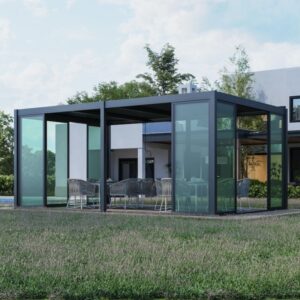
If you’re exploring options, here are examples of configurations often used in alfresco zones: glass door options for pergolas.
10) Consider glazing and framing choices that reduce temperature shock
Without getting overly technical:
• Thicker glass and better framing can slightly moderate temperature swings
• Some glazing options can reduce rapid cooling and improve comfort
• The biggest gains usually come from airflow + moisture control first, then material choices
11) Treat persistent mould risk as a “fix the cause” problem
If surfaces stay damp, mould can take hold on adjacent materials (timber, paint, silicone, furnishings).
If you notice:
• Musty smells
• Black spotting around edges and seals
• Dampness that doesn’t clear even on sunny days
Focus on:
• Ventilation consistency
• Drying and cleaning routines
• Removing moisture sources
• Addressing drainage and water pooling
A practical Aussie checklist for clearer outdoor glass
Daily / when you notice fogging
• Open up for 10 minutes in the morning to flush out humid air
• Run a fan on low to move air across the glass
• Dry wet mats/rugs elsewhere
• Avoid drying laundry under cover overnight
Weekly
• Vacuum and wipe bottom tracks
• Check drainage outlets are clear
• Inspect seals for obvious wear or gaps
Seasonal (before winter or wet season)
• Review airflow: Can you create a small safe vent gap overnight?
• Reduce persistent moisture sources near glass
• Plan shade/blind routines for cold, clear nights
Scenarios Australians run into (and what usually works)
“It’s worst in winter mornings and clears by lunchtime”
Likely: cool glass + humid morning air.
Best first moves:
• Morning airflow flush
• Fan on low overnight
• Track cleaning to prevent pooling
“It’s worse after a run of humid days”
Likely: surfaces never fully dry, and moisture accumulates.
Best first moves:
• Reduce moisture sources (plants, wet mats, damp pavers)
• Increase ventilation time (not just intensity)
• Consider a consistent vent gap if safe
“It only happens on one side”
Likely: airflow dead zone, shade pattern, or a moisture source nearby.
Best first moves:
• Move plants or damp items away
• Add a fan aimed across that bay
• Check drainage and seals in that corner
More Q&A throughout (the questions people actually ask)
Q&A
Q: Will anti-fog sprays fix outdoor condensation?
They can reduce visible fogging for a short period, but they don’t remove the cause (humid air + cold surface). If the space stays damp, you’re better off improving airflow and moisture management first.
Q&A
Q: Is condensation a sign that the outdoor area is “too sealed”?
Sometimes. If you’ve enclosed an alfresco area tightly and there’s no planned ventilation path, humidity can build up. The fix is usually controlled ventilation rather than making everything looser and draftier.
Q&A
Q: Why is the glass wetter under cover than the glass fence out in the open?
Because the open area gets more breeze and dries faster. Under cover, humid air can sit still, and the glass can stay cooler longer, so condensation forms and hangs around.
When it’s time to look closer at your setup
If condensation is constant, heavy, and doesn’t respond to ventilation and moisture control, it’s worth reviewing how your outdoor space handles:
• Air exchange (especially when closed)
• Drainage and track cleanliness
• Seal condition and wind exposure
• Shading and overnight cooling patterns
If you’re comparing enclosure configurations, you might find it helpful to look at how different layouts manage airflow in real life, such as sliding glass panels for outdoor areas.
FAQ
Why does outdoor glass get wet overnight in Australia?
Because the glass cools down and the air reaches the dew point. Humidity can be high overnight and in early mornings, even when there’s no rain.
How do I stop outdoor glass from fogging in winter?
Start with airflow: flush the space in the morning, keep a small ventilation gap if safe, and use a fan on low to move air across the glass. Then reduce moisture sources and keep tracks clean.
Is morning condensation normal on an enclosed alfresco?
Occasional condensation can be normal, especially in cool or humid conditions. It becomes a concern if the space stays damp for long periods or if you see mould developing.
Why does condensation happen more under a pergola?
Because covered areas often trap humid air and reduce breeze-driven drying, glass can also cool quickly overnight, especially with clear skies and shaded zones.
Can blocked tracks make condensation look worse?
Yes. Water that can’t drain or dry will pool and re-wet surfaces, making it seem like the glass is “creating” more moisture than it really is.
What’s the best “set and forget” way to reduce it?
A consistent approach works best:
• planned ventilation (even small gaps)
• gentle air movement (fan)
• removing moisture sources
• track/drainage maintenance
If you’re designing or upgrading, consider systems that support those basics long term — for example, why you should install a sliding glass door on your pergola can come down to comfort control as much as weather protection.