Blog
Keeping Your Pergola Comfortable Year-Round: Heat, Glare, and Airflow Tips for Large Openings

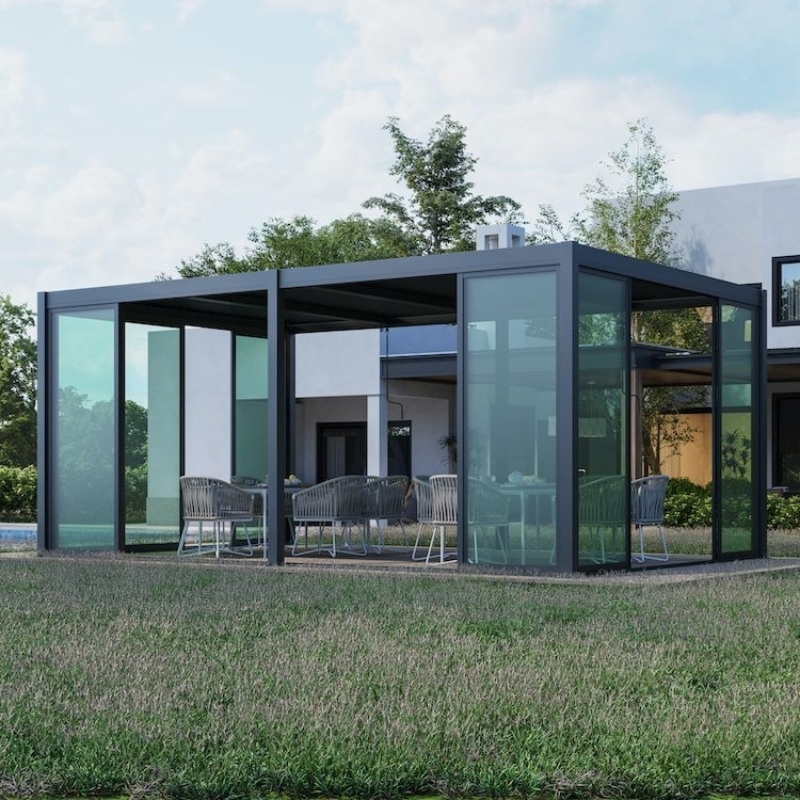
A pergola is meant to be the easy “in-between” space: open enough to feel like outdoors, protected enough to be usable more often than a bare patio. But once you’ve got a big opening (or multiple openings), comfort can swing wildly through the seasons.
• Summer: the space can feel like an oven by mid-afternoon, with glare bouncing off paving and harsh low-angle sun.
• Winter: cold air creeps in, the area feels draughty, and you end up retreating indoors.
• Shoulder seasons: it’s comfortable one minute, then a gust hits, or the sun shifts, and the whole vibe changes.
The good news: year-round comfort usually comes down to managing three things—heat, glare, and airflow—without accidentally making another problem worse.
And if your pergola is (or will be) connected to glass sliding doors, you’ve got even more control—because you can fine-tune openness, block wind, reduce noise, and keep the space bright while still feeling “outside”. The key is setting them up in a way that supports comfort, not just looks.
Start with the comfort triangle: heat, glare, airflow
Before buying anything or changing your layout, do a quick read of your space at the times you actually use it (breakfast, late afternoon, evening). Walk around and notice what’s happening.
Heat: What kind of heat is it?
Heat in pergola spaces usually comes from one (or a mix) of these:
• Direct sun: sunlight landing on people, furniture, and floors.
• Radiant heat: hot surfaces (pavers, dark decking, brick) “throwing” heat back at you.
• Trapped warm air: when airflow is reduced, and hot air lingers.
The fix depends on the source. For example, a fan won’t solve direct sun on your lounge, but it can make trapped warm air feel far less oppressive.
Glare: the hidden comfort killer
Glare is often what makes people abandon an alfresco even when the temperature is “not that bad”.
Common glare culprits:
• Low-angle sun (especially west-facing)
• Light-coloured paving reflecting into your eyes
• Glossy outdoor tables, glass balustrades, and pool water reflections
• Bright sky glare when the space is “open” but still partially shaded
Glare control should keep the space bright and pleasant—not turn it into a dark box.
Airflow: comfort is usually about moving air
Even a small increase in air movement can change how you feel dramatically. But airflow is not just “open more stuff”. It’s about creating a path for air to move through the space.
Think in terms of:
• Where air comes in
• Where it exists
• What blocks it (screens, plants, furniture placement)
• Whether hot air can rise out, especially in enclosed or semi-enclosed setups
A quick pergola comfort audit (10 minutes)
Do this once in summer (or on a warm day) and once in winter (or on a cool day). You’ll know exactly what to prioritise.
The heat audit
• Stand where you sit most often at 3–5 pm. Is the discomfort from the sun on your skin, or hot air, or the hot floor?
• Touch the paving/decking with your hand (carefully). If it’s very hot, you’re dealing with surface heat.
• Check the “hot wall” effect: brick or dark cladding nearby can radiate heat well into the evening.
The glare audit
• Sit in your usual seat and look toward the yard. Are you squinting?
• Note which direction the sun comes from when glare is worst.
• Look for reflective surfaces: light stone pavers, glossy furniture, pool, neighbouring windows.
The airflow audit
• Hold a light tea towel or tissue at shoulder height—does it flutter at all?
• Open the area the way you normally would. Is there a clear “through-breeze”, or does air just swirl?
• Notice if one side is a dead zone (often blocked by screens, shrubs, or bulky furniture).
Summer comfort: reduce heat without killing the breeze
Most pergola summer problems come from trying to block the sun and accidentally blocking airflow, too. You want adjustable solutions whenever possible.
Prioritise shade where the sun is actually entering
A lot of people shade the roof and forget the sides—then get blasted by low-angle sun from the west or north-west.
Best practice (practical, not perfect):
• Block the low-angle sun from the side it enters
• Keep at least one “breeze side” more open when conditions allow
• Use adjustable elements so you can change the space hour-to-hour
If you want a reliable baseline to guide decisions, look at Australian passive design shading principles (they map neatly onto pergola comfort): YourHome guidance on shading
Control surface heat: the “hot floor” fix list
If the floor is storing heat, your pergola will feel hot even after the sun leaves.
Try these:
• Add an outdoor rug (breathable, quick-dry) in the seating zone
• Introduce plants to shade paving (pots you can move seasonally work well)
• Use lighter, matte finishes on tables and key surfaces where reflections bounce up
• If you’re renovating later, consider lighter paving colours and less heat-absorbing materials
Use fans properly (most people place them incorrectly)
An outdoor-rated ceiling fan can make a pergola feel dramatically cooler, but only if it’s doing useful work.
What helps:
• A fan over the seating/dining zone, not just in the middle of the roof
• Enough clearance so the airflow reaches people (too high = wasted)
• Pairing fan use with side shading so you’re not trying to “fan away” direct sun
A fan won’t stop radiant heat from pavers, but it can make it far more tolerable.
Glare control that doesn’t turn your pergola into a cave
Glare is about light direction, not just “too much light”. Aim to soften and redirect it.
Options that often work well:
• Side screens with a texture/mesh that reduces glare while still letting light through
• External blinds on the worst sun side (especially for late afternoon)
• Planting as a natural glare diffuser (tall, narrow screening plants can be effective)
The trick is to treat glare like you would indoors: filter it, don’t eliminate daylight entirely.
Winter comfort: stop draughts and keep the space bright
In cooler months, pergolas often feel uncomfortable because of wind and air leakage—not because it’s “too cold outside”.
Wind management beats “heating” most of the time
If you stop the wind from cutting through the space, your body feels warmer immediately.
What to target:
• The prevailing wind side (often the side you should be able to close off)
• The low-level gaps where wind sneaks in and hits ankles
• The corners where gusts whip around
This is where large openings become an opportunity. If you can partially close the pergola while keeping visibility and daylight, you’ll use the space far more often.
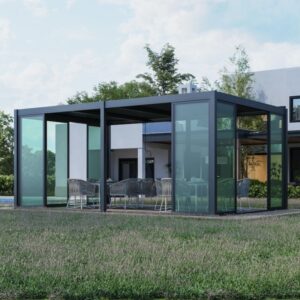
Where glass sliding doors help pergola comfort (without making it feel indoors)
When people ask for glass sliding door options for pergolas, the comfort conversation usually comes down to flexibility.
What they can do well in a pergola/alfresco context:
• Reduce wind and draughts while keeping the view
• Keep the space bright (compared to heavy outdoor curtains)
• Allow “incremental openness” (open one panel for a breeze, close the rest)
• Improve comfort on shoulder-season days when conditions change quickly
The aim isn’t to make the pergola a sealed living room. It’s to create control: open when it’s good, close when it’s not.
If your pergola is exposed to shifting breezes or you’re trying to keep the view while dialling down wind and noise, high-quality glass sliding doors can give you the flexibility to open up the space when conditions are perfect and close it down when they’re not—without making the area feel dark or boxed-in.
Airflow in pergolas with big openings: what actually works
Airflow is easiest to improve when you stop thinking of the pergola as a “single space” and start thinking in zones.
Build a breeze path
A breeze path is simply a line where air can enter and exit without hitting a wall of furniture, screens, or planting.
Try this:
• Identify the side you want air to enter
• Identify where it can exit (ideally opposite or at an angle)
• Keep that line relatively clear at sitting height
Small layout changes matter:
• Move a tall BBQ cabinet away from the main opening
• Don’t block the breeze side with dense plants in a straight line
• Avoid placing bulky furniture perpendicular to the opening if it creates a wind break where you actually want airflow
Use “high/low” ventilation thinking
Hot air rises. If your pergola is partially enclosed, you’ll feel stuffy if there’s no way for hot air to escape.
Practical moves:
• Keep a higher pathway for warm air to move out (even a small upper gap can help)
• Avoid sealing everything tight on hot days unless you’ve planned mechanical ventilation
• If you use blinds/screens, open the top slightly to let heat vent while still blocking the sun
Q&A: Why does my pergola feel hotter when I enclose it?
Because an enclosure can reduce airflow and trap hot air, especially if the sun still enters. The fix is usually one of:
• better side shading (block the sun before it enters)
• a planned airflow path (in/out openings)
• fans to create air movement in the seating zone
Often you need two of the three, not just one.
Glare: the practical fixes that make a big difference
Glare isn’t just annoying; it creates headaches and makes the space feel harsher.
Reduce reflected glare from the ground
If your paving is light and glossy, it can reflect sunlight upwards into your eyes—especially late afternoon.
Try:
• Outdoor rugs where you sit
• Matte finishes on furniture surfaces
• Shade planting that breaks up reflection patterns
• Relocating the “main seat” so you’re not looking into a reflection corridor
Control low-angle sun (especially west-facing)
West-facing sun is often the reason the space is unusable from 3–7 pm in summer.
Best approach:
• Side shading that you can adjust as the sun moves
• Keeping the roof shading as a baseline, but treating sides as the real control points
• Using a layered approach: a screen for glare + a fan for comfort
Q&A: Should I prioritise glare control or heat reduction?
If people are squinting and avoiding the space even when it’s not extremely hot, glare control usually gives the fastest “quality of life” win. Heat reduction tends to be a broader set of changes. In practice, side shading often improves both at once.
“Large opening” comfort strategies that don’t become a maintenance headache
Comfort improvements should still be livable. If they’re annoying to use, they won’t get used.
Make adjustments easy
If it takes you 10 minutes to “set up” the pergola, you’ll stop doing it.
Aim for:
• 1–2 key adjustments that solve the worst issue (often late-afternoon sun)
• quick-open/quick-close options for wind changes
• a default “set and forget” position that’s acceptable most days
Keep tracks and thresholds clean (it affects comfort more than you’d think)
When openings aren’t gliding smoothly, people avoid adjusting them—then the pergola stays in a poor comfort mode.
A simple habit:
• quick sweep/blow out of tracks weekly in leaf season
• rinse if you’re coastal (salt + grit is a brutal combo)
• check for small debris after storms
When people start comparing glass sliding doors options for pergolas, the most useful question isn’t “which one is best?”—it’s “what problem am I trying to solve here: harsh afternoon glare, gusty crosswinds, insects at dusk, or keeping the space usable in winter?”
Season-by-season comfort checklist (Australia-friendly)
Use this as a practical routine rather than trying to “solve” everything permanently.
Summer
• Side shade ready for late-afternoon sun (especially west/north-west)
• Fan set up over the seating zone
• Glare-control layer (screen/mesh/planting) to stop squinting
• Surface heat reduced in the seating area (rug, shade, lighter surfaces)
Autumn
• Adjust shade timing earlier as the sun angle changes
• Clear leaves from tracks and drains
• Check seals and closures before the wind picks up
• Reposition furniture to maintain a breeze path on warmer days
Winter
• Close off the prevailing wind side when needed
• Keep the space bright (avoid heavy dark layers that make it gloomy)
• Focus on draught control at the low level
• Use targeted warmth (throw blankets, radiant heater, where appropriate) only after wind is managed
Spring
• Reset the “default open position” for comfortable airflow
• Check for condensation or damp spots after cool nights
• Reassess glare as sun path changes
When to DIY vs when to call a pro
A lot of comfort improvements are simple. Some issues are signs of a bigger problem that can affect usability and safety.
DIY is usually fine for:
• furniture layout changes to create airflow
• adding shade layers (screens/blinds)
• fans and soft glare control
• cleaning and basic maintenance routines
Call a qualified pro if you notice:
• persistent water ingress during rain around openings
• recurring condensation that doesn’t improve with ventilation changes
• movement, misalignment, or grinding/jamming that returns quickly after cleaning
• gaps that create strong draughts and cannot be solved with simple adjustments
• safety concerns with glass or hardware around kids/pets
For year-round comfort, the details around thresholds, drainage paths, and smooth track operation matter as much as the panels themselves, which is why planning glass sliding doors installation early (before you finalise flooring levels and runoff direction) can prevent common issues like water ingress, gritty tracks, and unwanted draught gaps.
Q&A: How do I keep the pergola open-feeling but still comfortable?
Think “selective control”:
• filter the harsh sunlight
• keep the best breeze side more open
• Use glass only where you need wind reduction or flexible closure
• keep sightlines clear so it still feels outdoor
FAQ: Pergola comfort, glare and airflow
How can I cool my pergola without blocking airflow?
Use side shading to block low-angle sun first, then maintain a clear breeze path through the space. Add a fan over the seating zone to increase “felt” cooling without sealing everything up.
Why is my pergola hottest in the late afternoon?
Late-afternoon sun is lower and often hits from the west, slipping under roof shading and blasting the space sideways. At the same time, paving and walls may have stored heat all day and radiate it back.
What’s the easiest way to reduce glare in an alfresco area?
Start with the side you’re facing when you sit. A glare-filtering screen layer plus an outdoor rug (to reduce reflected glare) can make a noticeable difference quickly.
Do ceiling fans work in pergolas?
Yes—especially when placed above the seating/dining zone and used with shading. Fans won’t remove heat from hot surfaces, but they can make the space feel much more comfortable.
How do I improve airflow if my pergola is partially enclosed?
Create an entry and exit point for air (even if small), keep a clear breeze path, and avoid blocking airflow with tall furniture or dense screening. If it gets stuffy, consider high/low venting logic and fan assistance.
Will enclosing a pergola make it too hot?
It can, if sun still enters and hot air can’t escape. Comfort improves when you combine shading (stop sun from entering) with planned ventilation and air movement.
Are big openings harder to manage year-round?
They can be—but they also give you options. With adjustable shading and flexible closure, large openings can be the reason your pergola stays usable across more days of the year.